






What's Happening?
A joint venture involving billionaire hedge fund founder Ken Griffin, Vornado Realty Trust, and Rudin has finalized a $3.3 billion construction loan for a new 66-story office skyscraper at 350 Park Avenue in Midtown Manhattan. Vornado announced the finalization
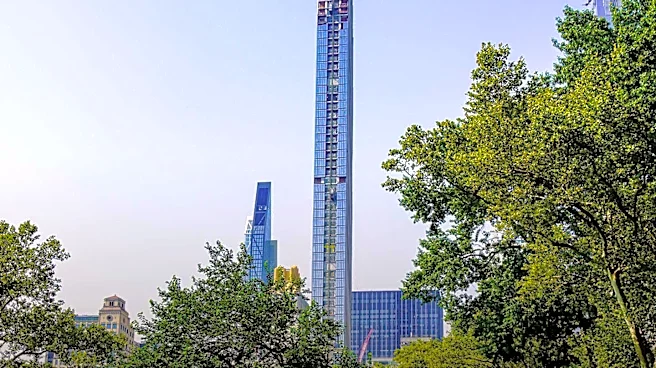
of the joint venture, which will see an affiliate of Ken Griffin's Citadel owning 60% of the project, Vornado holding a 36% stake, and Rudin retaining the remaining 4%. Citadel Enterprise Americas LLC has committed to a massive lease, securing 1.05 million square feet of office space, which accounts for more than half of the building's planned 1.9 million square feet. The multibillion-dollar loan is being provided by a consortium of seven financial institutions, including Wells Fargo, JPMorgan Chase, Bank of America, BMO Bank, ING Capital, PNC Bank, and Standard Chartered Bank. Construction of the tower, designed by Foster + Partners, is already underway and will rise approximately 1,400 feet above Park Avenue, featuring luxury amenities. The development also includes a $150 million contribution towards the maintenance of St. Patrick's Cathedral and Saint Bartholomew's Church through the purchase of development rights.
Why It's Important?
This significant development project underscores continued confidence in the high-end commercial real estate market in New York City, despite broader challenges facing the office sector. The substantial investment by Ken Griffin and Citadel's long-term lease commitment signal a belief in the enduring value of prime Manhattan office space, particularly for companies seeking state-of-the-art facilities. The securing of a $3.3 billion construction loan from a syndicate of major banks highlights the financial industry's willingness to back large-scale, high-profile projects with strong anchor tenants. This project could serve as a benchmark for future commercial developments in the city, potentially influencing investment trends and property values in the surrounding areas. Furthermore, the contribution to St. Patrick's Cathedral and Saint Bartholomew's Church through development rights demonstrates how large-scale urban projects can integrate with and support local institutions, reflecting a complex interplay between commercial development and community interests.
What's Next?
Construction of the 66-story skyscraper at 350 Park Avenue is currently in progress, with completion expected to significantly alter the Midtown Manhattan skyline. The project will make approximately 850,000 square feet of office space on its upper floors available for lease, indicating future opportunities for other businesses to establish a presence in this prime location. The successful completion and full occupancy of this tower will be a key indicator of the health and future direction of New York City's commercial real estate market. The involvement of multiple major financial institutions in providing the construction loan suggests ongoing monitoring of the project's financial performance and market reception. The development's impact on the surrounding area, including potential economic benefits and changes in urban dynamics, will be observed as it progresses towards completion and beyond. The project's success could also influence future decisions by other major corporations regarding their office footprints in urban centers.
Beyond the Headlines
The development of the 350 Park Avenue skyscraper, anchored by Citadel, reflects a broader trend of top-tier companies investing in premium, amenity-rich office spaces even as remote work gains traction. This suggests a strategic differentiation in the commercial real estate market, where older or less desirable office buildings may struggle, while new, high-quality developments continue to attract tenants. The project's scale and the involvement of a prominent figure like Ken Griffin also highlight the significant capital flows and strategic decisions shaping urban landscapes. The contribution to religious institutions through development rights showcases a unique aspect of urban development in New York City, where historical preservation and new construction often intersect through complex regulatory and financial mechanisms. This interplay raises questions about the balance between commercial interests, urban heritage, and community benefit in dense metropolitan areas.