




What's Happening?
NASCAR Cup Series driver Christopher Bell of Joe Gibbs Racing has voiced strong criticism regarding the new Daytona package introduced at the Coke Zero Sugar 400. Bell, who finished 17th in the race, stated that the updated package was 'arguably worse'
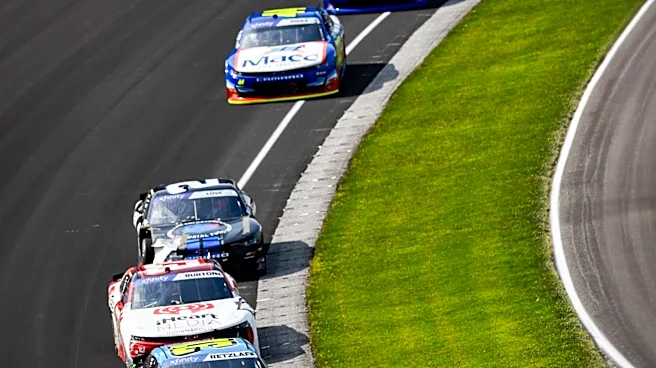
than previous iterations. NASCAR had revamped the rules package to reduce gridlock at superspeedways, implementing a new car body with lower drag and less horsepower, aiming to create larger gaps and allow drivers to build more runs. However, Bell found that the changes did not yield the intended results, noting that cars drove 'the exact same' and the lower horsepower led to increased fuel saving. He also observed a lack of 'holes' or 'bubbles' to separate cars, which meant fewer opportunities to maneuver. Following this disappointing finish, Bell dropped out of the top-5 standings and will enter the Chase as the sixth-seeded driver, while his three teammates are all ranked within the top-5.
Why It's Important?
Christopher Bell's critique of the new Daytona package highlights significant challenges and potential missteps in NASCAR's efforts to enhance racing dynamics and fan engagement. The sanctioning body's intention to create more competitive and less predictable races by altering car specifications and rules is a continuous process, and driver feedback is crucial for its success. If prominent drivers like Bell find the changes to be ineffective or even detrimental, it could lead to broader dissatisfaction within the racing community and among fans. This situation underscores the delicate balance NASCAR must maintain between innovation and preserving the integrity and excitement of the sport. The performance of the new package directly impacts race outcomes, driver strategies, and ultimately, the entertainment value for spectators, influencing viewership and sponsorship. Furthermore, Bell's drop in the standings due to this performance could affect his championship aspirations, demonstrating how rule changes can have immediate and tangible consequences for individual competitors and teams.
What's Next?
Following Christopher Bell's critical assessment, NASCAR will likely face pressure to evaluate the effectiveness of the new Daytona package and consider potential adjustments for future races. The feedback from drivers, particularly those with significant influence and experience, will be a key factor in these discussions. While Chase Elliott offered a more positive perspective on the new package, the contrasting opinions suggest a need for further analysis and possibly modifications. The upcoming races, especially as the Chase progresses, will provide more data points on how the new rules impact different tracks and racing styles. Stakeholders, including teams, sponsors, and fans, will be closely watching to see if NASCAR addresses these concerns and if the package evolves to meet its stated objectives of improving competition. The performance of drivers like Bell in subsequent races will also indicate whether they adapt to the new conditions or if the issues persist, potentially influencing future rule-making decisions.
Beyond the Headlines
The debate over NASCAR's new Daytona package extends beyond immediate race results, touching upon the fundamental philosophy of motorsports innovation. The tension between maintaining traditional racing elements and introducing changes to enhance competition is a recurring theme in sports. Bell's comments reflect a broader concern about whether rule modifications genuinely improve the spectacle or inadvertently create new problems, such as increased fuel saving or a lack of passing opportunities. This situation also highlights the subjective nature of 'better' racing, as different drivers and fans may have varying preferences for what constitutes an exciting event. The long-term implications could include a re-evaluation of how NASCAR implements and tests new rules, potentially leading to more collaborative processes with drivers and teams. Ultimately, the success of such changes depends on their ability to consistently deliver thrilling races while preserving the core challenges and skills that define the sport, ensuring its continued appeal to a diverse audience.