



What's Happening?
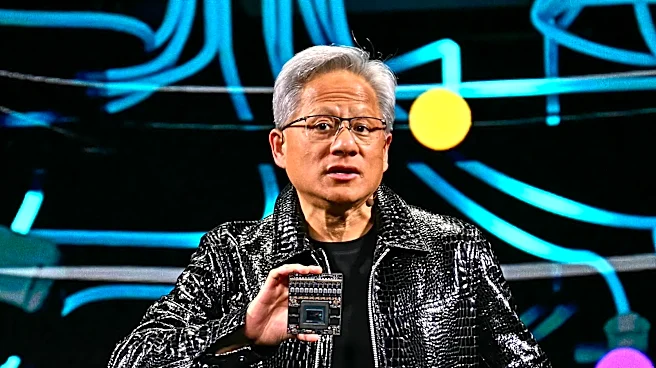
Jensen Huang has returned as CEO of Nvidia, a development that has been met with a surge in most AI stocks, with the notable exception of Anthropic. Shares of Anthropic, a recently public AI company, saw little change or a slight dip following the announcement,
while Nvidia's stock soared. This market reaction stems from a fundamental disagreement between Huang and Anthropic CEO Dario Amodei regarding the future direction of AI development. Huang champions open-weight AI models, which companies can download, modify, and run independently without recurring fees. Nvidia has been actively investing in this approach, developing its own Nemotron models and backing startups like Reflection AI. In contrast, Anthropic's business model relies on developing powerful, tightly controlled AI models that customers pay to access. This ideological split creates a competitive dynamic where Huang's return is seen as a potential threat to Anthropic's revenue strategy.
Why It's Important?
The return of Jensen Huang to Nvidia's helm intensifies the 'Cold War' within the AI industry, pitting proponents of open-source AI against those advocating for proprietary, closed models. For Anthropic, Huang's renewed leadership at Nvidia represents a significant challenge to its core business strategy, which relies on charging premium prices for its advanced AI technology. Nvidia's push for open-weight models could increase demand for its chips, as more companies would need hardware to run these downloadable AI models. However, this approach directly undermines Anthropic's ability to monetize its proprietary AI, potentially leading to price pressures and a shift in market preference. This rivalry could shape the future landscape of AI development and commercialization, influencing how AI technologies are accessed, used, and priced across various U.S. industries. The outcome of this strategic battle will determine which business models thrive in the rapidly evolving AI sector.
What's Next?
With Jensen Huang back in charge, Nvidia is expected to resume and potentially accelerate its investments in open-weight AI models and related startups. This renewed focus will likely intensify competition with companies like Anthropic, which rely on closed AI systems. Anthropic may need to re-evaluate its market strategy to counter the growing influence of open-source alternatives, possibly by emphasizing unique features, performance, or specialized applications of its proprietary models. The broader AI industry will likely see increased innovation in both open and closed AI ecosystems as these two giants compete. Furthermore, the debate over AI chip export restrictions to China, where Huang and Amodei have differing views, could also resurface, potentially influencing U.S. technology policy and international trade relations in the AI sector. The market will closely watch how Anthropic adapts to this renewed competitive pressure from Nvidia.
Beyond the Headlines
The ideological clash between Jensen Huang's vision for open-weight AI and Dario Amodei's commitment to proprietary models extends beyond mere business competition; it touches upon fundamental questions about the future of technological innovation and access. An open AI ecosystem, championed by Huang, could foster greater collaboration, accelerate research, and democratize access to powerful AI tools, potentially leading to more widespread societal benefits. However, it also raises concerns about control, security, and the potential for misuse if advanced AI models are freely available. Conversely, proprietary models, while offering more control and potentially higher quality assurance, could create walled gardens that limit innovation and concentrate power among a few dominant players. This ongoing 'Cold War' will likely influence regulatory frameworks, ethical guidelines, and the overall direction of AI development, impacting everything from national security to economic competitiveness and the accessibility of advanced technology for all.