


What's Happening?
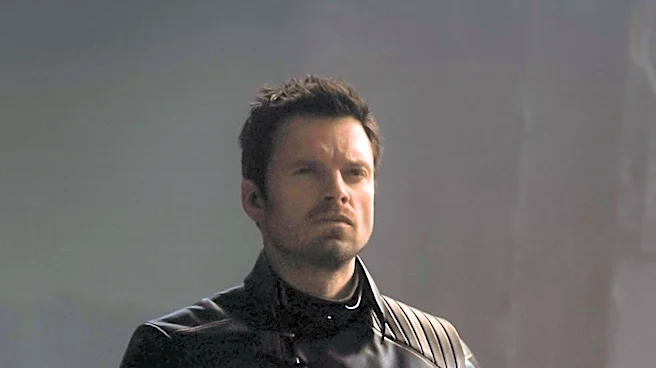
Actor Sebastian Stan, known for his role as Bucky Barnes in the Marvel Cinematic Universe (MCU), has expressed nostalgia for the early days of filming Marvel movies. In a recent interview with GQ, Stan recalled a time when productions relied more heavily
on practical sets rather than green screens, and actors were not constantly performing opposite tennis balls. He highlighted that during the MCU's first phase, there was less public scrutiny and social media leakage of plot details, allowing for a more private and focused filming environment. Stan noted that the 'magnifying glass' on productions is significantly larger now, making it difficult to shoot on location without immediate online dissemination of information. This sentiment reflects a shift in the filmmaking landscape, particularly for large franchises like Marvel, where fan engagement and digital presence have become increasingly prominent.
Why It's Important?
Stan's reflections underscore a significant evolution in Hollywood filmmaking, particularly within major franchises. The shift from practical sets to extensive use of green screens and CGI impacts not only the aesthetic of films but also the actors' experience and the production process. While CGI offers creative freedom and spectacle, the reliance on practical effects can provide a more tangible and immersive environment for performers. Furthermore, the increased social media presence and the constant threat of leaks highlight the challenges modern productions face in maintaining secrecy and controlling narratives. This environment can affect marketing strategies, fan anticipation, and even the creative choices made during production. For the U.S. entertainment industry, this trend signifies a continuous adaptation to technological advancements and evolving media consumption habits, influencing how blockbusters are made and consumed.
What's Next?
The trend towards more digital effects and heightened social media scrutiny is likely to continue shaping the future of large-scale film productions. Studios will need to further adapt their strategies for maintaining secrecy and managing public perception in an age where information spreads instantly. This could involve stricter non-disclosure agreements, more controlled set environments, or even embracing fan engagement in new ways. For actors like Stan, navigating these changes means adapting to different acting techniques and managing their public personas in an always-on digital world. The industry may also see a renewed appreciation for practical effects in certain productions, as filmmakers seek to balance technological innovation with the tangible qualities that actors and audiences sometimes miss.
Beyond the Headlines
Beyond the immediate production challenges, Stan's comments touch upon broader cultural shifts. The 'magnifying glass' he describes extends beyond film sets to nearly all aspects of public life, driven by pervasive social media and instant information sharing. This constant visibility can impact creative freedom, as every decision and detail is subject to immediate public commentary and potential backlash. For the entertainment industry, this means a delicate balance between engaging with a global fanbase and protecting the integrity and surprise elements of their creative works. It also raises questions about the nature of celebrity and privacy in the digital age, where the line between public and private life is increasingly blurred for prominent figures.