








What's Happening?
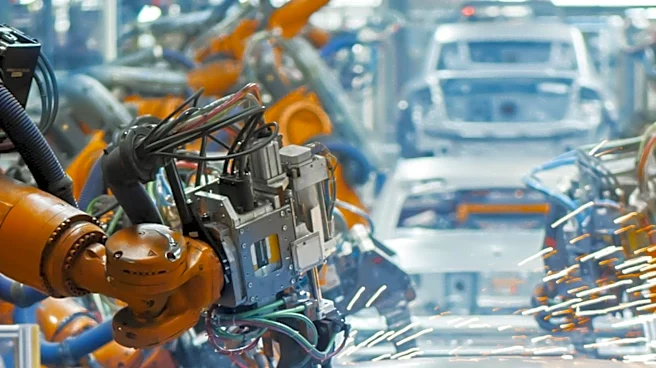
A substantial gap exists in the adoption of AI and automation within U.S. manufacturing facilities, with 80% currently operating without any automation. This issue is highlighted by the increasing interest in automation technologies, as evidenced by record
attendance at Automate 2026. Despite the high awareness of the benefits of smart manufacturing, as reported by Deloitte's 2025 Smart Manufacturing and Operations Survey, execution remains a challenge. The workforce shortage exacerbates the urgency to close this gap, as companies struggle to find qualified operators and technicians. Honeywell CEO Vimal Kapur emphasizes that AI-enabled systems are being viewed as revenue-generation tools rather than just cost-reduction mechanisms. New technological advancements, such as ABB's Ability Field Information Manager 3.5 and Sonair's safety-certified 3D ultrasonic sensor, are beginning to address the infrastructure and operational challenges that have hindered automation adoption.
Why It's Important?
The slow adoption of AI and automation in U.S. manufacturing has significant implications for the industry's competitiveness. As global markets increasingly rely on smart manufacturing, U.S. facilities risk falling behind if they do not embrace these technologies. The labor shortage further pressures companies to automate to maintain productivity and efficiency. By viewing AI as a tool for revenue generation, companies can shift their focus from cost-cutting to growth and innovation. This shift could lead to more sustainable business models and improved operational efficiency. The introduction of new technologies that reduce the complexity and cost of automation could accelerate adoption, helping U.S. manufacturers remain competitive in the global market.
What's Next?
As the demand for automation grows, manufacturers are likely to increase investments in AI and robotics. Companies may need to reevaluate their operational strategies to integrate these technologies effectively. The development of new platforms and sensors that simplify automation processes could encourage more facilities to adopt these technologies. Additionally, as the workforce continues to shrink, the pressure to automate will likely intensify, pushing companies to find innovative solutions to maintain productivity. The industry may also see increased collaboration between technology providers and manufacturers to develop tailored solutions that address specific operational challenges.