









What's Happening?
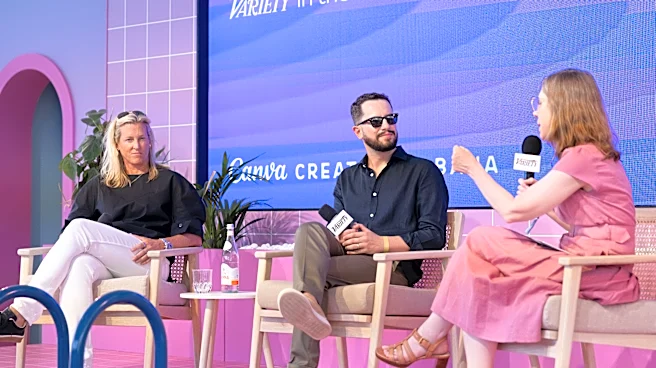
David Sandström, the Chief Marketing Officer of Klarna, has shared insights on how artificial intelligence (AI) is reshaping the marketing landscape. Speaking at Cannes Lions 2026, Sandström highlighted that the role of the CMO is evolving from traditional
creative and media-buying tasks to more architectural and structural responsibilities. Klarna, a well-known fintech brand, has distinguished itself by breaking conventional banking norms and focusing on emotional connections with consumers. Sandström emphasized that AI is not replacing jobs but automating tedious tasks, allowing marketers to focus more on creativity. He also noted that AI is democratizing creativity, enabling brands to generate numerous creative possibilities quickly, thus enhancing the role of human vision and creativity in marketing.
Why It's Important?
The insights from Klarna's CMO underscore a significant shift in the marketing industry, where AI is transforming how brands engage with consumers. This shift could lead to a revival of brand building, focusing on emotional connections rather than purely data-driven strategies. As AI takes over optimization tasks, the competitive advantage may lie in the ability to create unique and emotionally resonant brand experiences. This transformation could impact how marketing teams are structured, with a growing need for professionals who understand both creativity and technology. The evolving role of the CMO as a technologist and strategist highlights the increasing importance of integrating AI into marketing strategies to enhance brand value.
What's Next?
As AI continues to influence marketing practices, companies may need to adapt by hiring more versatile marketers who can bridge the gap between creativity and technology. The role of agencies might also evolve, becoming more collaborative partners rather than sole creators. Brands like Klarna may continue to leverage AI to explore a wider range of creative ideas, potentially leading to more innovative and effective marketing campaigns. The focus on emotional connections could drive a resurgence in brand loyalty and consumer engagement, as companies strive to differentiate themselves in an AI-optimized market.
Beyond the Headlines
The integration of AI in marketing raises ethical considerations regarding data privacy and the potential for AI to perpetuate biases in creative outputs. As AI tools become more prevalent, marketers must ensure that their use of technology aligns with ethical standards and consumer expectations. Additionally, the shift towards AI-driven creativity may challenge traditional notions of authorship and originality in marketing, prompting discussions about the role of human creativity in an increasingly automated world.