



What's Happening?
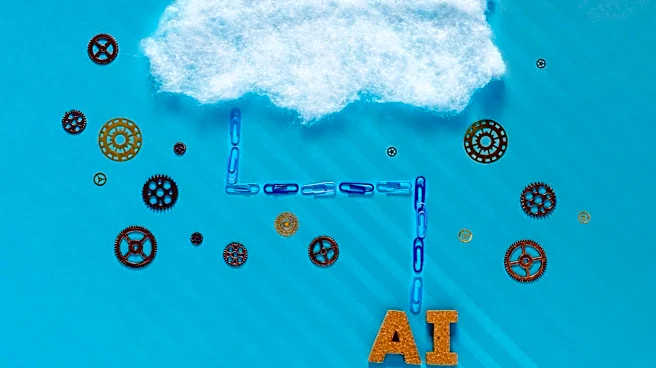
Canva has introduced its first proprietary AI image model, Canva Craft, now available globally to all users. This new model is specifically designed for designers and represents a deeper integration of AI into Canva's platform. While Canva has incorporated
AI tools and third-party models for several years, including its Magic Media which debuted in 2023, Canva Craft is an in-house development. Stefano Corazza, Canva's head of AI research, stated that the acquisition of Leonardo.Ai and an internal increase in AI research bolstered the company's efforts to create this specialized model. The move aims to reduce cloud costs and accelerate inference times. Canva Craft utilizes a two-stage architecture, allowing it to 'reason' before generating designs, mimicking the human design process by planning image layouts. The model is trained on Canva's extensive library, licensed and public databases, and data from users who opted into training, with the goal of producing more complex and comprehensive designs.
Why It's Important?
The launch of Canva Craft signifies a significant advancement in AI-powered design tools, potentially democratizing sophisticated design capabilities for a broader audience. By offering a proprietary AI model tailored for designers, Canva aims to enhance efficiency and creativity within the design workflow. This development could impact the graphic design industry by providing tools that can generate complex layouts and designs more rapidly, potentially reducing the time and effort required for concept creation. For businesses, especially small to medium-sized enterprises, this could mean faster turnaround times for marketing materials and visual content, leading to cost savings and increased productivity. The ability of Canva Craft to 'reason' before generating designs suggests a move towards more intelligent and context-aware AI in creative fields, which could set a new standard for design software.
What's Next?
Canva is expected to continue refining Canva Craft and integrating more advanced AI functionalities into its platform. The company's focus on the ability to edit AI outputs, as demonstrated by tools like Magic Layers, indicates a commitment to providing users with greater control over AI-generated content. This will likely involve further development of features that allow designers to break down and adjust AI designs at a granular level. As AI models improve, there will be an ongoing discussion and potential for new challenges regarding the verification of human-made versus AI-generated work, particularly for professional creators. Canva's continued investment in in-house AI development suggests a strategic push to maintain a competitive edge in the rapidly evolving AI design landscape, potentially leading to more acquisitions or partnerships to bolster its AI capabilities.
Beyond the Headlines
The introduction of Canva Craft also highlights the ongoing debate and controversies surrounding creative AI tools. Artists, photographers, and illustrators have expressed concerns about AI models being trained on their work without consent, potential copyright infringements, and the fear of AI replacing human artists. While companies like Canva assert that AI serves as a tool to augment human creativity, the ethical implications of AI-generated content and its impact on the livelihoods of creative professionals remain a critical issue. The need for creators to verify their work as human-made in an increasingly AI-driven environment adds a layer of complexity to the creative industry. This development underscores a broader shift in how creative work is produced and consumed, prompting questions about intellectual property, artistic authenticity, and the future role of human creativity in a technologically advanced world.