
What's Happening?
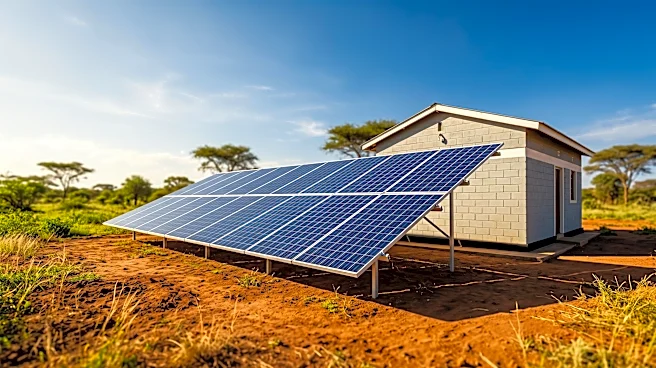
The off-grid solar photovoltaic (PV) market in Sub-Saharan Africa is anticipated to experience a sixfold increase in installed capacity by 2035. This growth is driven by persistent grid limitations, the
rising cost of diesel for self-generation, decreasing solar module prices, and increased investment from private and blended finance providers. Currently, 600 million people in the region lack reliable electricity access, making off-grid solar a crucial solution for households, businesses, and industrial operations. Nigeria is expected to remain the largest market, accounting for nearly 35% of the region's off-grid solar installations by 2035, partly due to the removal of fuel subsidies in 2023 which made diesel more expensive. Kenya's market is maturing, with solar increasingly complementing grid supply for cost reduction rather than solely providing first-time access. The Democratic Republic of Congo is also emerging as a significant market, particularly for mining operations seeking to reduce reliance on diesel.
Why It's Important?
This projected growth in off-grid solar is critical for Sub-Saharan Africa's development, addressing a fundamental lack of electricity access that hinders economic and social progress. Reliable power enables businesses to operate more efficiently, improves educational opportunities, and enhances healthcare services. The shift away from diesel generation reduces operational costs for industries, particularly in mining, and significantly lowers carbon emissions, contributing to global climate goals. Furthermore, the expansion of off-grid solar fosters energy independence and security for countries without domestic fossil fuel resources, mitigating the impact of volatile global energy markets. The 'solar as a service' model, where developers install systems with limited upfront costs, makes clean energy accessible to a broader population, promoting economic inclusion and improving living standards. However, challenges such as currency depreciation, high interest rates, and inconsistent rural electrification policies continue to pose financing hurdles.
What's Next?
To fully realize the multi-gigawatt potential of off-grid solar in Sub-Saharan Africa, significant efforts are needed to overcome financing challenges. This includes attracting more private capital and blended finance to support developers, customers, and project pipelines. Policy frameworks will need to be strengthened to provide a stable and attractive environment for investment, potentially through incentives and streamlined regulatory processes. The continued development of innovative business models, such as 'solar as a service' and value stacking (combining energy sales with financing and productive use appliances), will be crucial for expanding access and improving project bankability. As the market matures, there will likely be a greater integration of off-grid solutions with existing grid infrastructure, with solar complementing rather than entirely replacing traditional power sources. The success of these initiatives will determine the pace at which the region can achieve universal energy access and sustainable development.
Beyond the Headlines
The rapid expansion of off-grid solar in Sub-Saharan Africa represents a paradigm shift in energy development, moving away from centralized, fossil-fuel-dependent models towards decentralized, renewable solutions. This transition has profound implications beyond mere electricity provision. It empowers local communities by giving them control over their energy sources, fostering local entrepreneurship, and creating new economic opportunities. The reduction in reliance on imported fossil fuels can also improve national trade balances and reduce geopolitical vulnerabilities. Moreover, the widespread adoption of solar technology can accelerate technological literacy and innovation within the region. However, it also presents challenges related to ensuring equitable access, managing e-waste from solar components, and developing robust local supply chains. The success of this energy revolution in Africa could serve as a powerful model for other developing regions facing similar energy access and climate challenges.