




What's Happening?
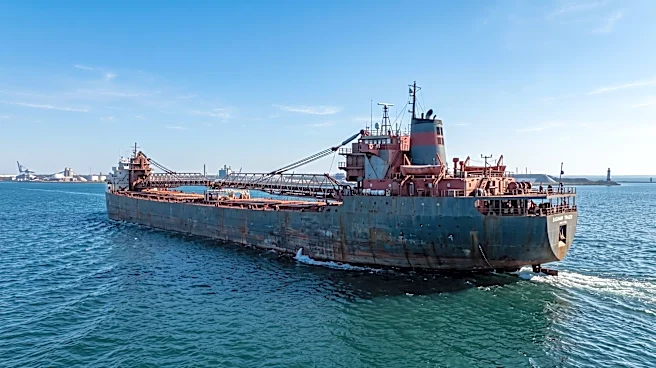
Great Lakes freighters, such as the Mesabi Miner, can carry immense loads, with a full iron-ore load estimated at 90,000 US tons (180 million pounds). The Mesabi Miner, a 1,004-foot vessel, has a listed empty-ship weight and maximum pellet cargo totaling
about 88,700 US tons before fuel and supplies. However, the actual amount of cargo a freighter can carry is significantly influenced by the water depth in loading ports and connecting channels. A few inches of usable depth can determine whether hundreds of tons of ore can be loaded. For instance, the Paul R. Tregurtha, the longest ship on the Great Lakes at 1,013.5 feet, can carry 76,160 US tons of taconite pellets, but its coal capacity is different due to coal occupying more space per ton. The ship's draft, which is the vertical distance between the waterline and the bottom of the hull, changes as cargo is loaded or removed, and this is a critical factor in navigating shallow areas.
Why It's Important?
The operational constraints faced by Great Lakes freighters due to water depth have direct economic implications for U.S. industries, particularly those reliant on bulk cargo transport like steel manufacturing and mining. The ability of these vessels to carry maximum loads directly impacts the cost-effectiveness and efficiency of transporting raw materials such such as iron ore and coal. When water levels are low, or channels are not adequately dredged, freighters are forced to carry lighter loads, leading to increased shipping costs per ton and potentially higher prices for end products. This can affect the competitiveness of U.S. industries that depend on these materials. The need for precise draft management and the impact of even small changes in water depth highlight the critical importance of maintaining navigable waterways and investing in infrastructure like dredging projects to ensure the smooth flow of essential commodities across the Great Lakes region.
What's Next?
The challenges posed by water depth variations will likely continue to drive efforts in several areas. There will be an ongoing focus on monitoring Great Lakes water levels and forecasting their impact on shipping capacity. This will necessitate continued investment in dredging operations to maintain adequate depths in critical channels and harbors, ensuring that freighters can operate at or near their maximum capacity. Ship operators may also explore technological solutions, such as advanced draft monitoring systems and optimized loading strategies, to maximize cargo while adhering to safety and navigational limits. Furthermore, the design of future Great Lakes freighters might incorporate features that allow for greater flexibility in varying water depths. Policy discussions around infrastructure funding for waterways and environmental management of the Great Lakes will remain crucial to support this vital transportation network.
Beyond the Headlines
The intricate relationship between Great Lakes freighters and water depth extends beyond immediate economic concerns, touching upon broader environmental and historical dimensions. The Great Lakes ecosystem is sensitive to changes in water levels, which can be influenced by climate patterns, precipitation, and human activities. The need for dredging, while essential for shipping, can also have environmental impacts on aquatic habitats and sediment distribution. Historically, the Great Lakes have been a crucial artery for industrial development in the U.S., and the continued efficiency of this transport system is vital for the region's economic identity. The challenges faced by freighters underscore the delicate balance between industrial needs and environmental stewardship. This situation also highlights the engineering marvel of these massive vessels, designed to navigate unique freshwater environments, and the continuous innovation required to adapt to changing natural conditions while maintaining their critical role in the nation's supply chain.