







What's Happening?
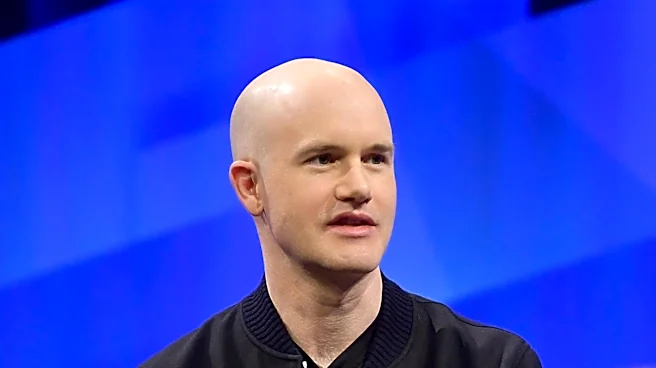
Brian Armstrong, CEO of Coinbase, with an estimated net worth of $9.3 billion, has publicly stated his refusal to establish a charitable foundation. Armstrong expressed a "contrarian view" on philanthropy during an appearance on the Katie Miller Podcast,
arguing that many charities and philanthropies are "actually net negative on the world" and often become "captured by ideology." He cited concerns about losing control over the foundation's direction and suggested that some philanthropic efforts are driven by self-interest rather than genuine generosity, referencing Bill Gates. Despite his stance against traditional foundations, Armstrong does utilize a donor-advised fund to support causes he believes advance civilization. He and his wife have also sponsored the Polytopia Championship, a mobile game tournament, contributing to its $10,000 prize pool.
Why It's Important?
Armstrong's position challenges conventional expectations for ultra-wealthy individuals regarding philanthropy and charitable giving. His critique of foundations as potentially "net negative" and susceptible to ideological capture could spark debate within the philanthropic sector and among high-net-worth individuals. This perspective may influence how other tech leaders and entrepreneurs approach their wealth distribution and social impact initiatives. The decision to forgo a traditional foundation, often used for tax benefits and public image, highlights a different approach to wealth management and societal contribution. It also brings attention to alternative forms of giving, such as direct sponsorships or donor-advised funds, which offer more direct control over the allocation of resources.
What's Next?
Armstrong's public statements may prompt further discussion and scrutiny regarding the effectiveness and governance of large charitable foundations. Other wealthy individuals might re-evaluate their philanthropic strategies in light of his criticisms, potentially leading to a shift towards more direct or controlled forms of giving. The crypto industry, where Armstrong is a prominent figure, may see increased dialogue about corporate social responsibility and individual wealth distribution. His continued use of a donor-advised fund suggests a preference for targeted giving, which could become a more visible trend among those who share his skepticism about traditional philanthropic structures. The sponsorship of events like the Polytopia Championship indicates a potential for more unconventional and niche forms of support.
Beyond the Headlines
Armstrong's comments delve into the ethical and practical complexities of large-scale philanthropy. His concern about foundations being "captured by ideology" raises questions about the long-term autonomy and mission creep of charitable organizations. This perspective challenges the widely accepted notion that all philanthropic endeavors are inherently positive, prompting a deeper examination of their actual impact and accountability. It also highlights the tension between individual donor intent and the evolving priorities of established institutions. The debate could lead to a re-evaluation of the role of wealth in addressing societal issues and the most effective mechanisms for deploying private capital for public good, potentially fostering new models of impact investment or direct funding for specific projects.