



What's Happening?
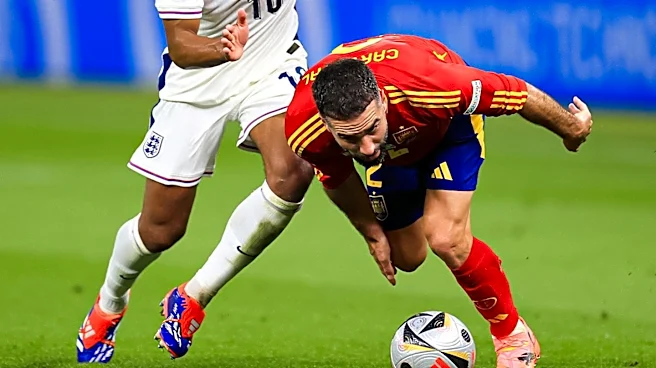
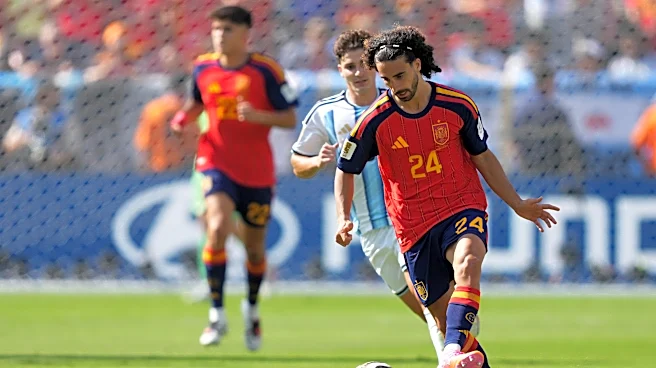
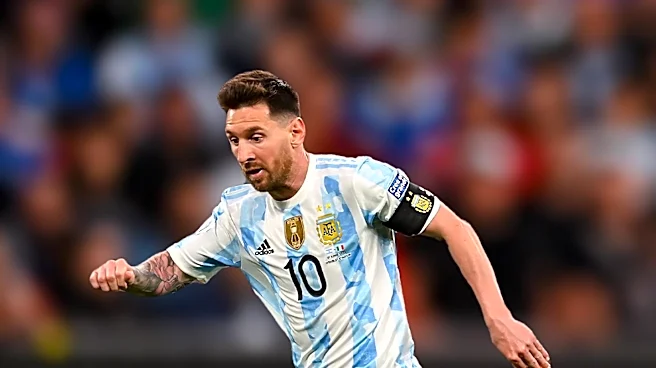
Lionel Messi faced criticism after attempting to get Spain's Marc Cucurella sent off during the World Cup final. The incident occurred following a red card given to Argentina's Enzo Fernandez. Messi approached the referee, allegedly trying to report Cucurella for
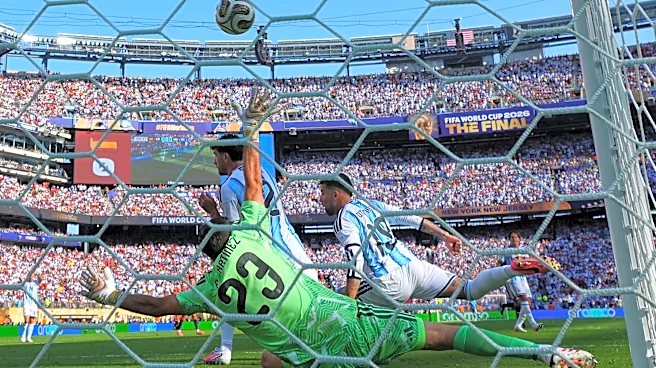
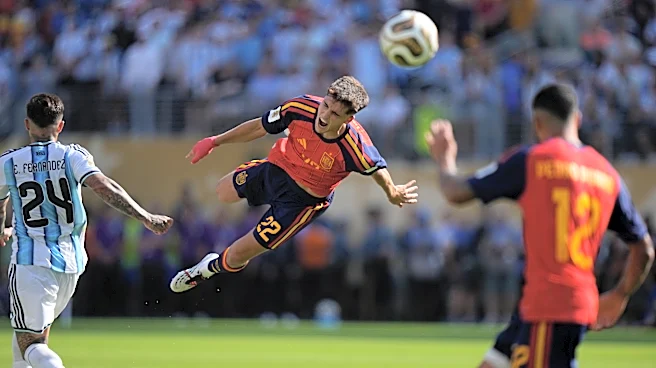
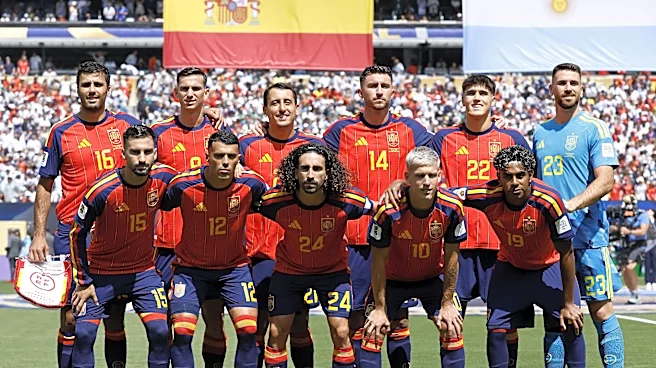
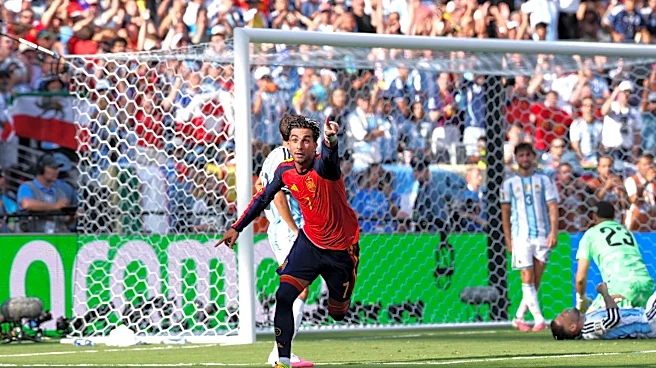
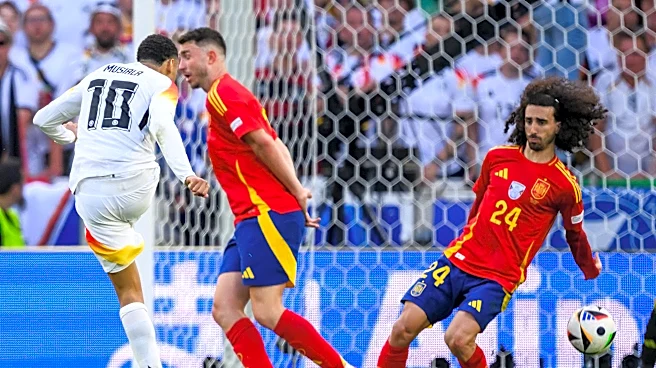
communicating with him while covering his mouth, a move that can lead to a sending off under FIFA rules. Despite Messi's efforts, Spain won the match 1-0 in extra time, marking their second World Cup victory. The game was characterized by Argentina's defensive play and Spain's persistent attacks, culminating in Ferran Torres scoring the decisive goal.
Why It's Important?
This incident highlights the intense pressure and scrutiny faced by top athletes during high-stakes competitions like the World Cup. Messi's actions and the subsequent criticism reflect the emotional and strategic complexities involved in such matches. The outcome of the final not only affects the players and teams involved but also has broader implications for international soccer dynamics, fan engagement, and the legacy of players like Messi. Spain's victory reinforces their status as a dominant force in international soccer, while Argentina's performance raises questions about their future strategies.
What's Next?
As the World Cup concludes, attention will shift to the future of key players like Messi, who may be considering retirement from international play. Teams will analyze their performances and make strategic adjustments for upcoming tournaments. The incident involving Messi and Cucurella may prompt discussions within FIFA about the rules regarding player interactions and conduct on the field. Additionally, the outcome of the final could influence coaching decisions and team compositions for both Spain and Argentina in future competitions.
Beyond the Headlines
The criticism of Messi's actions underscores the ethical considerations in sportsmanship and fair play. Such incidents can influence public perceptions of players and impact their reputations. The World Cup final serves as a reminder of the cultural and emotional significance of soccer, as well as the intense rivalries and narratives that shape the sport. The event also highlights the role of media in framing athlete behavior and influencing public discourse.