



What's Happening?
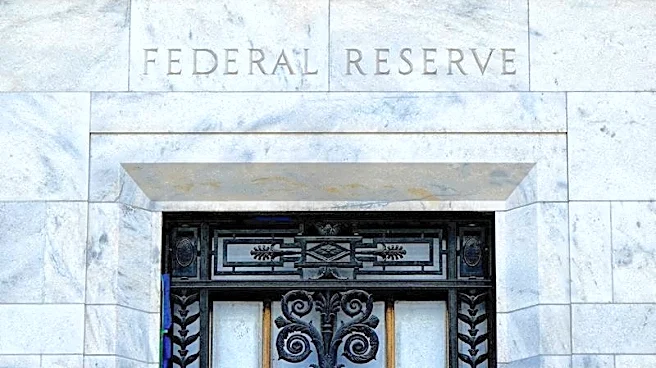
J.P. Morgan has revised its forecast for a Federal Reserve rate hike, now expecting a quarter-point increase in December 2026. This adjustment follows the Fed's decision to keep rates unchanged at its July meeting. The change in forecast is attributed
to ongoing inflationary pressures, driven by rising fuel and food prices, as well as strong business spending related to artificial intelligence. Despite the unchanged rates, there was dissent among three members of the Federal Open Market Committee who favored a rate increase. J.P. Morgan anticipates that the Fed will maintain rates between 3.75% and 4.00% after the December hike, although a September increase remains possible if inflation continues to rise.
Why It's Important?
The decision by J.P. Morgan to bring forward its rate hike forecast underscores the persistent inflationary pressures facing the U.S. economy. This move could signal a shift in monetary policy that may impact borrowing costs for businesses and consumers. Higher interest rates typically lead to increased costs for loans and mortgages, potentially slowing economic growth. The anticipation of a rate hike also reflects concerns about the Fed's ability to manage inflation effectively, which has remained above the target for several years. This development could influence market expectations and investor behavior, as well as impact sectors sensitive to interest rate changes, such as real estate and consumer finance.
What's Next?
If inflation continues to rise, the Federal Reserve may face increased pressure to act sooner than anticipated, potentially leading to a rate hike in September. This would require careful communication from the Fed to manage market expectations and avoid volatility. Additionally, other financial institutions and analysts may adjust their forecasts in response to J.P. Morgan's revised outlook, further influencing market dynamics. Stakeholders, including businesses and policymakers, will need to monitor inflation trends closely and prepare for potential changes in monetary policy.