






What's Happening?
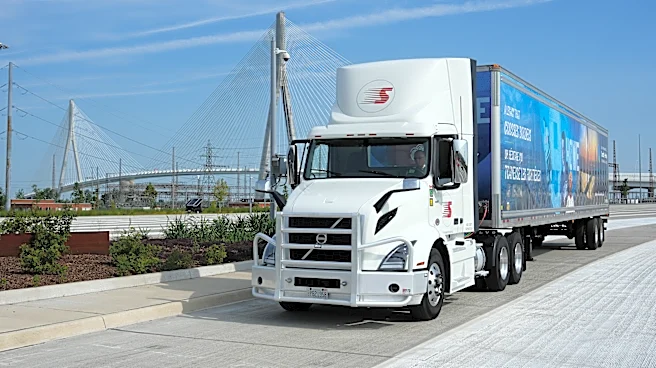
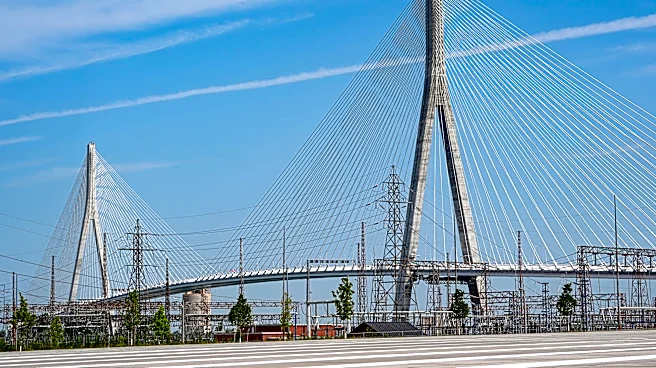
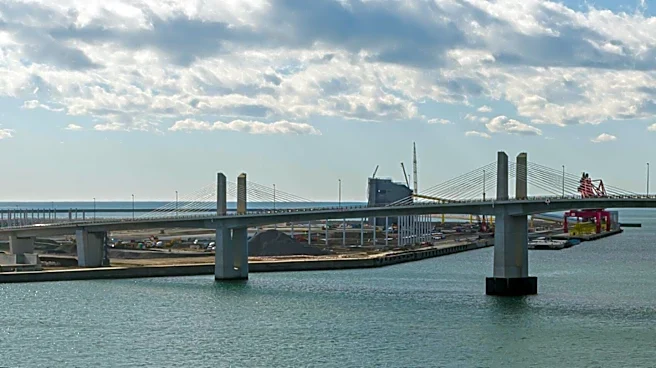
The newly opened Gordie Howe International Bridge between Detroit, Michigan, and Windsor, Ontario, is expected to improve transport efficiency across the U.S.-Canada border. The bridge offers a direct connection between Ontario's Highway 401 and I-75,
featuring advanced X-ray imaging facilities and competitive toll rates. According to Stephen Laskowski, CEO of the Canadian Trucking Alliance, the bridge could save large trucking companies up to $100,000 a month. However, despite these improvements, high diesel fuel prices and recent industry challenges mean that cost savings may not immediately benefit consumers. The bridge's opening follows months of financial controversy and political tensions, including a dispute over tariffs and revenue sharing between the U.S. and Canada.
Why It's Important?
The Gordie Howe Bridge is a significant infrastructure development that enhances the efficiency of a major trade corridor between the U.S. and Canada. It is expected to facilitate smoother traffic flow and faster customs procedures, potentially boosting trade and economic growth. However, the immediate impact on consumer prices is limited due to ongoing high fuel costs and other economic pressures. The bridge's opening also highlights the complex interplay of international trade policies and infrastructure investments, as well as the potential for political disputes to influence economic outcomes.
What's Next?
As the bridge becomes fully operational, stakeholders will monitor its impact on trade efficiency and economic growth. Trucking companies may benefit from reduced operational costs, but the extent to which these savings are passed on to consumers remains uncertain. Additionally, political and economic developments, such as changes in tariff policies or fuel prices, could further influence the bridge's long-term impact on trade and consumer prices.