







What's Happening?
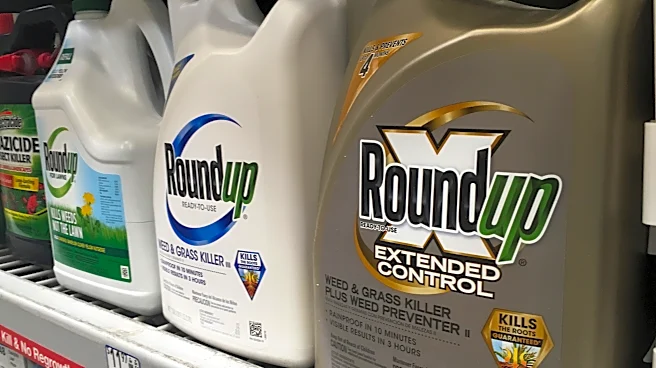
Bayer has achieved a significant legal milestone in its ongoing Roundup litigation. A Missouri state court has granted final approval to a nationwide U.S. class settlement. This settlement addresses both current and future claims alleging that exposure
to Roundup weedkiller caused non-Hodgkin's lymphoma (NHL). This court approval is a crucial component of Bayer's broader strategy to manage and mitigate the substantial costs and prolonged nature of the Roundup lawsuits. The settlement establishes a long-term claims program designed to resolve thousands of existing and potential future claims. This development follows a favorable U.S. Supreme Court ruling in the Durnell case in June, which also bolstered Bayer's legal position. Additionally, a recent unanimous defense verdict in the Aretino case, the first trial after the Durnell ruling, further supported Bayer's stance, as plaintiffs failed to establish claims of design defect, fraud, and negligence.
Why It's Important?
This court approval is highly significant for Bayer, as it provides a pathway to significantly reduce its financial exposure and legal uncertainties related to Roundup litigation. The settlement aims to cap the company's liabilities, offering more predictability for its financial outlook. For the agricultural sector, Bayer continues to emphasize the importance of glyphosate-based herbicides as essential tools for farmers in producing affordable food and supporting global food supplies. The company's success in these legal battles reinforces its position that glyphosate-based products, when used safely, are not carcinogenic, aligning with assessments from the U.S. Environmental Protection Agency (EPA) and other global regulatory bodies. This outcome could influence future product liability litigation, particularly concerning agricultural chemicals, by setting a precedent for how such widespread claims are managed and resolved.
What's Next?
While the Missouri court's final approval is a major step, the order remains subject to appeal. Bayer anticipates that the number of claimants who opt out of the settlement will be manageable, representing a small percentage of total claims. Although some who opt out may pursue individual litigation, Bayer believes many will not. Those who choose to litigate will face the challenge of demonstrating the legal viability of their claims following the Durnell ruling before proceeding to trial. Bayer maintains that it has made adequate financial provisions to manage any remaining litigation. The company aims to leverage this settlement and the Durnell ruling as foundational pillars of its legal strategy to bring greater certainty to the long-running legal battle surrounding Roundup.
Beyond the Headlines
The resolution of the Roundup litigation has broader implications beyond Bayer's immediate financial and legal standing. It highlights the complex interplay between scientific evidence, regulatory assessments, and legal interpretations in product liability cases, especially those involving widely used agricultural products. The outcome could influence public perception and regulatory approaches to other chemicals and products that face similar health-related claims. Furthermore, the case underscores the challenges companies face in managing mass tort litigation and the strategic importance of comprehensive legal strategies that combine settlements with favorable court rulings. The ongoing debate about the safety of glyphosate also reflects deeper societal concerns about food production, environmental health, and corporate responsibility.