




What's Happening?
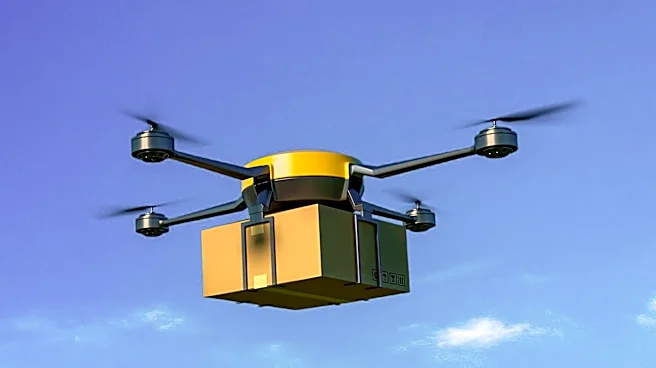
An Amazon Prime Air drone crashed into a neighbor's garage in Huntington Woods, Michigan, on November 20, after completing its first delivery to Jim Brennan and his wife. The drone, which delivered shampoo, struck a fiber-optic cable as it ascended after dropping
the package. The impact caused a propeller to detach, leading the drone to crash into Logan Coomes's garage, damaging the roof. No injuries were reported. An Amazon Prime Air crew arrived within ten minutes to address the incident, working with DTE utility crews to remove the drone. Amazon offered to cover the damage to the garage and provided the Coomes family with a $100 Amazon gift card. The Federal Aviation Administration (FAA) is currently investigating the crash, with a preliminary notice indicating the drone also became entangled in power lines. The flight originated from Amazon's Hazel Park hub.
Why It's Important?
This incident highlights the ongoing challenges and potential risks associated with drone delivery services, even as companies like Amazon aim for widespread expansion. While no one was injured, the damage to private property and the involvement of utility lines underscore the need for robust safety protocols and obstacle avoidance technology. Such events could impact public perception and regulatory scrutiny of drone delivery operations. For Amazon, which plans to expand Prime Air to nearly 500 U.S. cities and towns by the end of 2026, incidents like this could lead to increased operational costs, potential delays in expansion plans, and a need to reassure both customers and regulators about the safety and reliability of its drone fleet. The FAA investigation will be crucial in determining the cause and could influence future regulations for commercial drone operations.
What's Next?
The Federal Aviation Administration's investigation into the drone crash is ongoing, and its findings will be critical in understanding the cause of the incident. Depending on the FAA's conclusions, Amazon may need to review and potentially revise its drone flight protocols, obstacle detection systems, or operational procedures. For the affected residents, Amazon has committed to addressing the damage to the garage. Jim Brennan's home has been temporarily removed from the drone delivery list as a precautionary measure. Amazon's broader expansion plans for Prime Air to nearly 500 U.S. cities and towns by the end of 2026 will likely proceed, but the company will face continued scrutiny regarding the safety and reliability of its drone delivery service, especially in densely populated areas or those with complex aerial infrastructure. Future drone deliveries in the area may be subject to revised flight paths or additional safety assessments.
Beyond the Headlines
This drone crash touches upon broader implications concerning the integration of autonomous delivery systems into residential environments. The incident raises questions about liability, insurance, and the responsibilities of technology companies when their automated systems cause property damage or potential hazards. As drone delivery becomes more common, communities may need to consider zoning regulations or infrastructure adjustments to accommodate these new modes of transport. The interaction between drones and existing infrastructure, such as fiber-optic and power lines, presents a complex challenge that requires advanced technological solutions and careful route planning. Furthermore, public acceptance of drone delivery services could be significantly influenced by such incidents, potentially leading to calls for stricter oversight or more transparent reporting of operational failures. The balance between innovation and public safety will be a continuous point of discussion as drone technology advances.