




What's Happening?
Spring Lake Park Reserve, located less than an hour from Minneapolis in Hastings, Minnesota, provides a significant natural escape for residents and visitors. The park, situated in Dakota County, is a key destination for outdoor recreation, featuring
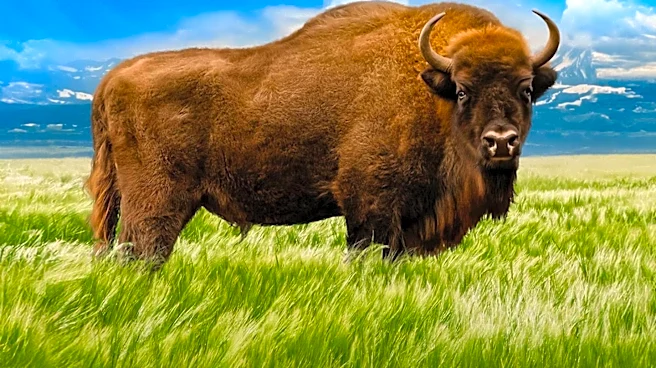
bison sightings, extensive trails, and scenic views of Spring Lake and the Mississippi River. It is part of the Mississippi River Greenway, a nearly 28-mile multiuse pathway. The reserve is open daily from 5 a.m. to 10 p.m. and offers three main trailheads: Fahey, Fischer, and Schaar's Bluff. A notable attraction is the 150-acre Bison Prairie, where a herd, introduced as part of a restoration project, can be observed from the Mississippi River Greenway. Dakota County regularly updates its website with the bison's paddock locations, and educational signs are placed along the prairie outskirts to inform visitors about the ecological and cultural significance of bison.
Why It's Important?
The existence of Spring Lake Park Reserve is important for several reasons, particularly for the well-being of residents in the Minneapolis-St. Paul metropolitan area. It offers a vital opportunity for urban populations to connect with nature, promoting physical activity and mental relaxation away from city life. The park's focus on bison restoration highlights significant conservation efforts, contributing to biodiversity and ecological balance within the region. The educational signage about bison's ecological role and cultural connection to Indigenous communities also serves to enrich visitors' understanding of local history and environmental science. Furthermore, the park's accessibility via the Mississippi River Greenway encourages sustainable transportation and provides a safe, scenic route for cyclists and pedestrians, enhancing regional recreational infrastructure. This natural amenity contributes to the overall quality of life and environmental stewardship in Minnesota.
What's Next?
Spring Lake Park Reserve will continue to serve as a significant recreational and conservation area. Future developments may include further expansion of its trail network, enhancements to visitor facilities, and ongoing efforts in wildlife management, particularly concerning the bison herd. The park's management will likely continue to update its website with information regarding bison locations and trail conditions, ensuring visitors have the best possible experience. Community engagement and educational programs related to the park's ecology and history are also expected to continue, fostering a deeper appreciation for natural resources. As urban populations grow, the demand for accessible natural spaces like Spring Lake Park Reserve will likely increase, potentially leading to more investment in its maintenance and development to accommodate a larger number of visitors while preserving its ecological integrity.
Beyond the Headlines
Beyond its immediate recreational benefits, Spring Lake Park Reserve embodies a broader commitment to environmental conservation and cultural preservation. The reintroduction of bison is not merely a tourist attraction but a critical ecological restoration project, aiming to restore native prairie ecosystems and their associated biodiversity. This initiative also carries significant cultural weight, acknowledging the historical and spiritual connection between bison and Indigenous communities in Minnesota. The park serves as a living classroom, educating the public about the importance of conservation, the interconnectedness of ecosystems, and the rich cultural heritage of the land. It represents a model for how urban areas can integrate natural spaces that offer both recreational opportunities and profound educational experiences, fostering a deeper sense of place and environmental responsibility among its visitors.