




What's Happening?
Johnny Depp auditioned for the iconic role of Marty McFly in the 1985 film 'Back to the Future' but was ultimately not cast. According to screenwriter Bob Gale, the filmmakers were searching for an actor who could bring immediate comic responses and a specific
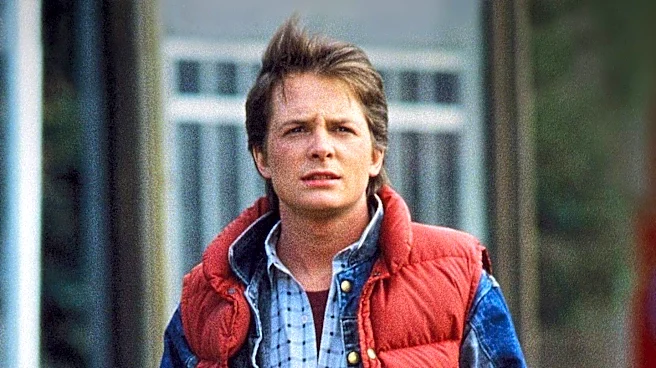
spark to the character. While Depp, then 21, was among a crowded field of young actors auditioning, including John Cusack, Robert Downey Jr., Charlie Sheen, and Ben Stiller, the team felt his reserved presence did not align with the desired comedic energy. Michael J. Fox was the initial first choice for the role but was unavailable due to his commitment to the sitcom 'Family Ties'. The production proceeded with Eric Stoltz for five weeks, but his more dramatic approach did not provide the lighter, comic touch the filmmakers sought. Fox eventually took over the role, working a demanding schedule that involved filming 'Family Ties' during the day and 'Back to the Future' at night. Fox's portrayal opposite Christopher Lloyd's Doc Brown was what audiences ultimately saw when the film premiered.
Why It's Important?
This revelation highlights the critical casting decisions that shape cinematic history and the impact of an actor's specific qualities on a film's success. The choice of Michael J. Fox for Marty McFly is widely regarded as integral to 'Back to the Future's' enduring appeal and cultural impact. Had a different actor, such as Johnny Depp, been cast, the film's tone, character dynamics, and overall reception could have been significantly altered. This scenario underscores the importance of an actor's comedic timing and on-screen persona in roles that require a particular blend of humor and relatability. For the entertainment industry, it serves as a reminder that initial casting choices, even when seemingly logical, may not always align with the creative vision, necessitating difficult but ultimately beneficial changes during production. The film's success, in part due to Fox's performance, cemented its place as a beloved classic and a benchmark for time-travel narratives.
What's Next?
While this information pertains to a historical casting decision, its continued discussion in the present day reflects the ongoing fascination with 'what-if' scenarios in popular culture. For fans of 'Back to the Future' and the actors involved, it offers new insights into the film's production challenges and the creative process behind its iconic characters. The enduring legacy of the film means that such details will likely continue to be revisited in documentaries, interviews, and fan discussions, further solidifying its place in cinematic lore. For aspiring actors and filmmakers, it provides a case study in the subjective nature of casting and the importance of finding the right fit for a role, even if it requires unconventional solutions or changes during production.
Beyond the Headlines
The story of Johnny Depp's audition for Marty McFly delves into the deeper implications of creative alignment and artistic vision in filmmaking. It illustrates that an actor's talent, while undeniable, must also harmonize with the specific demands of a character and the overall tone of a project. The filmmakers' decision to replace Eric Stoltz after five weeks of shooting, despite the significant financial and logistical challenges, underscores a commitment to artistic integrity over expediency. This commitment ultimately paid off, as 'Back to the Future' became a critical and commercial success. The narrative also subtly touches upon the pressures faced by young actors in Hollywood, with many future stars vying for a single breakout role. It highlights how a single casting decision can alter the trajectory of an actor's career and a film's cultural footprint, making it a pivotal moment in the history of a beloved American movie.