





What's Happening?
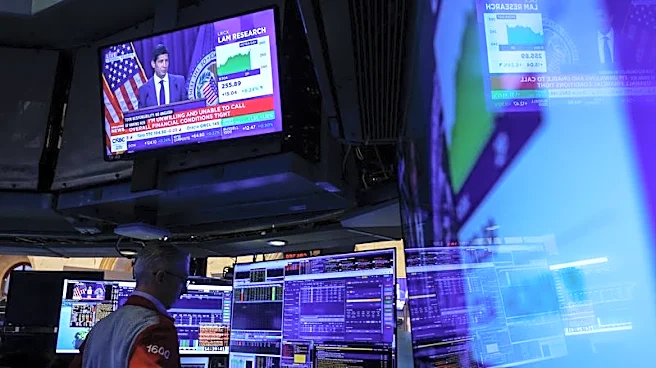
Alphabet, Google's parent company, experienced a substantial loss of over $500 billion in market value on October 30, 2026. This significant decline has raised concerns among investors and analysts about the potential popping of an 'AI bubble.' NBC News'
Allie Canal reported on the event, highlighting the extensive spending by big tech companies in the artificial intelligence sector and the broader impact of AI on the job market. The market's reaction suggests a growing apprehension regarding the sustainability of current valuations in the AI industry, prompting a reevaluation of the rapid investment and development in this technological frontier.
Why It's Important?
The massive market value drop for Alphabet is a critical indicator for the U.S. technology and financial sectors. It signals potential volatility and investor skepticism regarding the long-term profitability and realistic applications of AI technologies, especially given the substantial capital expenditures by major tech firms. A 'popping AI bubble' could lead to a broader market correction, impacting not only tech giants but also smaller AI startups and the venture capital ecosystem that funds them. This event could also influence corporate strategies, potentially leading to more cautious investment in AI research and development, and a greater emphasis on demonstrating tangible returns on AI investments. The impact on the job market, as noted by NBC News, suggests that the rapid advancement of AI could have significant societal implications, including job displacement or the creation of new types of roles, further complicating economic stability.
What's Next?
The immediate aftermath of Alphabet's market decline will likely involve increased scrutiny from investors and analysts on the financial health and AI strategies of other major tech companies. There may be a push for greater transparency regarding AI-related spending and revenue generation. Regulatory bodies might also intensify their focus on the AI sector, potentially leading to new policies aimed at mitigating risks associated with an overheated market or the societal impact of AI. Companies may re-evaluate their AI investment portfolios, prioritizing projects with clearer paths to profitability and demonstrable value. The event could also trigger a broader debate about the ethical implications and economic consequences of rapid AI development, influencing public discourse and policy decisions in the coming months.
Beyond the Headlines
The 'AI bubble' concerns extend beyond mere financial valuations; they touch upon fundamental questions about technological innovation, economic cycles, and societal adaptation. The rapid pace of AI development has led to both immense excitement and significant apprehension, with some experts warning of unrealistic expectations and unsustainable growth. This market correction could serve as a necessary recalibration, forcing the industry to mature and focus on practical, ethical, and sustainable AI applications. It also highlights the inherent risks of speculative investment in emerging technologies, where the promise often outpaces immediate profitability. The long-term implications could include a more measured approach to AI integration across industries, a greater emphasis on interdisciplinary collaboration to address complex challenges, and a re-evaluation of the role of technology in shaping future economies and societies.