



What's Happening?
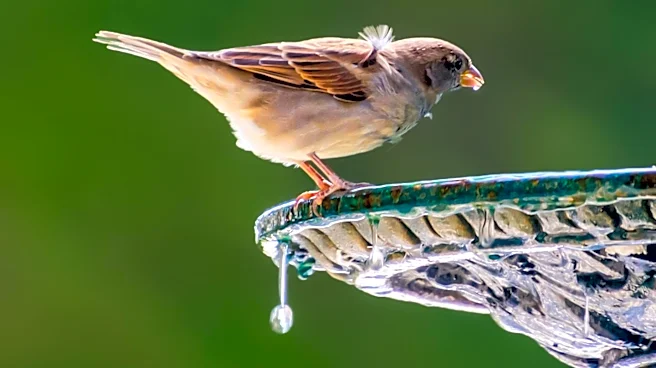
Homeowners are increasingly turning to upcycling to create unique and cost-effective birdbaths using everyday items or thrift store finds. This approach allows for the transformation of discarded objects like teacups, serving bowls, plastic buckets, and even
old trash can lids into functional and aesthetically pleasing water sources for birds. Key considerations for DIY birdbaths include ensuring a shallow depth of 1 to 2 inches, providing rough or textured surfaces for birds to grip, and potentially incorporating elements for water movement, such as solar-powered pumps. Examples include gluing teacups and saucers together, resting planter saucers on bricks or tomato cages, using vintage kitchen crocks with added rocks, and repurposing old frying pans or casserole dish lids.
Why It's Important?
The trend of DIY upcycled birdbaths highlights a growing interest in sustainable living and creative reuse within American households. This practice not only offers a budget-friendly alternative to commercially produced birdbaths but also contributes to waste reduction by giving new life to items that might otherwise end up in landfills. For homeowners, it provides an opportunity to personalize their outdoor spaces while supporting local wildlife. The emphasis on specific design elements like depth and surface texture underscores an understanding of birds' needs, promoting their health and safety. This movement reflects a broader shift towards conscious consumption and environmental stewardship, encouraging individuals to think creatively about repurposing materials.
What's Next?
As awareness of upcycling and sustainability grows, more individuals are likely to explore DIY projects for their homes and gardens. This could lead to an increase in online tutorials, community workshops, and social media sharing of creative upcycling ideas. Thrift stores and second-hand markets may see a rise in demand for items suitable for repurposing. Furthermore, manufacturers of gardening supplies might introduce products that complement upcycled designs, such as small solar pumps or bird-safe sealants. The continued adoption of such practices could foster a culture of resourcefulness and environmental responsibility, influencing design trends and consumer behavior in the home and garden sector.
Beyond the Headlines
Beyond the immediate benefits of cost savings and waste reduction, the act of creating upcycled birdbaths fosters a deeper connection between individuals and their local ecosystems. It encourages observation of nature and an understanding of the needs of local bird populations. This hands-on approach to sustainability can also inspire broader changes in consumer habits, promoting a mindset of repair, reuse, and repurpose over constant new purchases. Ethically, it raises questions about the lifecycle of products and the responsibility of individuals to minimize their environmental footprint. Culturally, it reinforces the value of craftsmanship and ingenuity, transforming discarded items into objects of beauty and utility, and contributing to a more resilient and sustainable community.