



What's Happening?
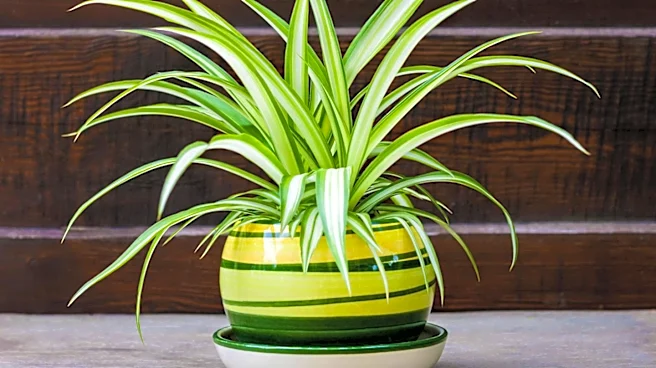
Spider plants, scientifically known as Chlorophytum comosum, are popular houseplants recognized for their ease of care and distinctive plantlets. However, a common issue faced by growers is the browning of leaf tips. According to sources like Wisconsin
and NC State, this problem is primarily caused by chemicals in tap water, specifically fluoride and chlorine, as well as salt buildup and low humidity. Over-fertilization can also contribute to brown tips and reduce the production of plantlets. To mitigate these issues, experts recommend watering with distilled water or rainwater, feeding lightly every three to four months at half strength, and ensuring the plant is in bright, indirect light to prevent scorching. The plant's fleshy roots allow it to tolerate some drought, but overwatering or poor drainage can lead to root rot. Repotting is advised when roots become crowded, typically every one to two years, using a well-draining general-purpose potting mix.
Why It's Important?
Understanding the specific care requirements for spider plants, particularly regarding water quality and fertilization, is crucial for both amateur and experienced plant enthusiasts. The prevalence of brown tips, often attributed to tap water chemicals, highlights a broader issue concerning water quality and its impact on horticulture. For individuals and businesses involved in plant sales and care, providing accurate guidance on these common problems can enhance customer satisfaction and plant longevity. The ease of propagation from plantlets also makes spider plants an accessible entry point for those new to gardening, fostering a connection with nature and potentially leading to further engagement in plant care. Addressing these issues effectively can reduce plant waste and promote sustainable gardening practices within U.S. households and communities.
What's Next?
For spider plant owners, the immediate next steps involve adjusting watering practices by switching to distilled or rainwater and reviewing fertilization schedules to ensure light, infrequent feeding. Monitoring humidity levels and considering a humidifier or pebble tray can also help prevent dry air-related issues. For nurseries and garden centers, this information can be integrated into plant care guides and customer advice, potentially leading to increased sales of distilled water or specialized plant care products. Further research into tap water filtration methods specifically designed to remove fluoride and chlorine for plant use could also emerge as a beneficial development. Educational initiatives promoting proper plant care, especially for common houseplants like spider plants, could help cultivate a more informed and successful gardening community.
Beyond the Headlines
The challenges of spider plant care, particularly the sensitivity to tap water chemicals, subtly underscore environmental considerations related to municipal water treatment. While tap water is safe for human consumption, its chemical composition can negatively affect certain plant species, prompting a reevaluation of water usage in gardening. This situation also highlights the broader trend of consumers seeking more natural and sustainable solutions for their homes, including plant care. The act of nurturing plants, even common ones like spider plants, can offer significant mental health benefits, such as stress reduction and a sense of accomplishment. Therefore, providing clear, actionable advice on plant care extends beyond mere horticulture; it contributes to individual well-being and a deeper appreciation for the natural world.