



What's Happening?
Miniature book nook kits are emerging as a popular hobby and gift item, offering a creative and relaxing activity for enthusiasts. These kits allow individuals to construct small dioramas that fit between books on a shelf, transforming ordinary bookshelves
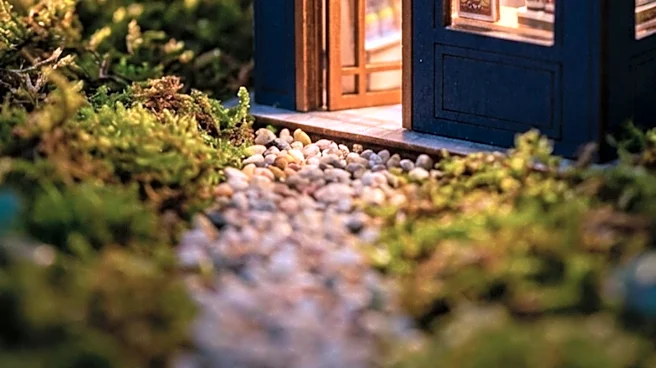
into decorative conversation pieces. The dioramas often depict scenes such as tiny bookstores, fantasy worlds, or cozy cottages, complete with built-in LED lights. Kits typically range in price from $20 to $40 and take between two to five hours to build, making them accessible for an evening or two of screen-free entertainment. Popular options include the Hands Craft Owl Bookstore kit, available on Amazon for $34.99, which features shelves stocked with miniature books, a violin, and a vintage film camera. Another notable kit is the Rolife Bookstore Book Nook Shelf Insert DIY Miniature Kit, priced at $30, which includes 194 pieces and takes approximately 3.5 hours to assemble. These kits are designed with pre-cut wood or press-out pieces, paper details, and tiny furniture, often incorporating a mirror at the back to create an illusion of depth. Most operate on two AAA batteries, eliminating the need for cords.
Why It's Important?
The rise in popularity of miniature book nook kits signifies a broader trend towards 'cozy hobbies' and screen-free activities, offering a tangible and satisfying alternative to digital entertainment. This trend provides a creative outlet that combines elements of 3D puzzles and model building, appealing to individuals seeking engaging yet relaxing pastimes. For the retail market, these kits represent a growing niche, particularly within the gift sector for book lovers and craft enthusiasts. The affordability and relatively short build time make them an attractive option for consumers looking for thoughtful, unique presents. The kits also contribute to home decor, allowing individuals to personalize their living spaces with intricate, illuminated displays. The increasing demand for such items reflects a consumer desire for hands-on engagement and the creation of aesthetically pleasing objects that enhance personal environments, moving away from purely consumption-based leisure activities.
What's Next?
The continued growth of the miniature book nook market is anticipated, with potential for new designs, themes, and increased availability across various retailers. As the trend gains momentum, manufacturers may introduce more complex kits, catering to experienced builders, or simpler versions for beginners and younger audiences. We can expect to see more themed kits, potentially tied to popular book series, movies, or historical periods, further expanding their appeal. Retailers might also offer workshops or community events centered around building these book nooks, fostering a sense of community among hobbyists. The market could also see an increase in accessory sales, such as specialized tools, miniature figures, and custom lighting options, allowing for greater personalization. Furthermore, the success of book nooks may inspire similar miniature craft trends, broadening the scope of 'cozy hobbies' available to consumers.
Beyond the Headlines
Beyond their immediate appeal as a hobby, miniature book nooks tap into a deeper human desire for creation, order, and the romanticization of spaces. The act of meticulously assembling tiny components to form a miniature world can be therapeutic, offering a sense of control and accomplishment in an often chaotic world. These dioramas also serve as a form of escapism, allowing individuals to immerse themselves in imagined environments, whether it's a bustling tiny bookstore or a serene fantasy landscape. Culturally, they reflect a growing appreciation for craftsmanship and the tangible, contrasting with the increasingly digital nature of modern life. The popularity of book nooks also highlights a renewed interest in physical books and reading, as these miniatures are designed to complement and enhance a personal library. This trend subtly reinforces the value of physical media and the creation of personal, curated spaces in an era dominated by digital content.