
What's Happening?
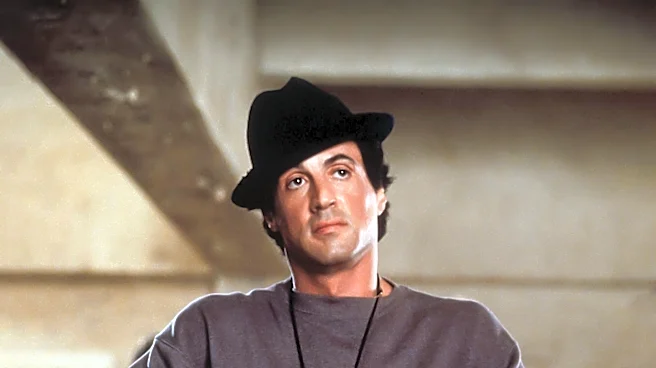
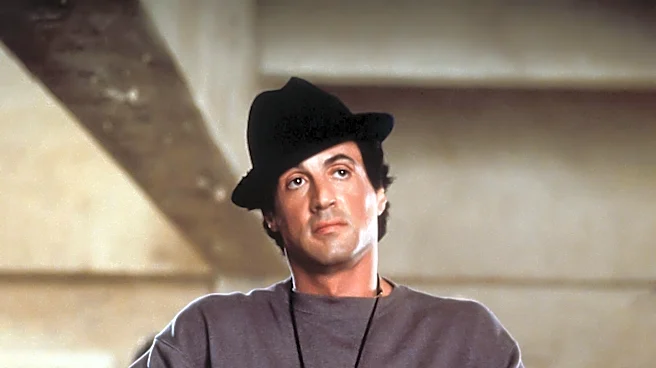
Before Sylvester Stallone famously insisted on playing the lead role in 'Rocky,' producers Irwin Winkler and Robert Chartoff considered several established stars for the titular character, including Burt
Reynolds, Charles Bronson, and Ryan O’Neal. Stallone, who also wrote the script, was initially an ambitious young actor-writer struggling to get a break. He conceived the idea for 'Rocky' after watching a fight between Muhammad Ali and Chuck Wepner. Despite producers' interest in his script, they preferred a star for the role, leading to heated negotiations where Stallone remained adamant that he would play Rocky himself, ultimately securing the part and launching his career.
Why It's Important?
The consideration of Burt Reynolds and other established actors for 'Rocky' before Sylvester Stallone's casting highlights a pivotal moment in Hollywood's approach to star power versus creative vision. This scenario underscores the common industry practice of seeking bankable names to ensure commercial success, even when the writer-creator has a strong desire to embody their own character. Stallone's unwavering insistence on playing Rocky, despite being an unknown at the time, ultimately led to one of cinema's most iconic underdog stories, both on and off screen. This decision proved to be a significant turning point, demonstrating that a compelling narrative and a passionate creator could sometimes override the conventional wisdom of casting established stars, thereby influencing future independent filmmaking and actor-writer projects.
What's Next?
The historical context of Burt Reynolds being considered for 'Rocky' continues to serve as a classic example in film history of a writer-actor fighting for their vision. This narrative often inspires aspiring filmmakers and actors to pursue their creative control. The success of 'Rocky' with Stallone in the lead role solidified the idea that authenticity and a deep connection to the material can be more impactful than pre-existing star power. This lesson remains relevant in today's entertainment landscape, where creators often seek to maintain artistic integrity against commercial pressures. The story of 'Rocky' and Stallone's fight for the role will likely continue to be a touchstone for discussions about creative autonomy and the making of cinematic legends.
Beyond the Headlines
The initial consideration of Burt Reynolds for 'Rocky' and Stallone's subsequent fight for the role delves into the deeper ethical and artistic implications of creative ownership in Hollywood. It raises questions about the value placed on a writer's vision versus the perceived marketability of a star. Stallone's struggle highlights the often-challenging journey for creators to bring their personal stories to the screen without compromise. This situation also touches upon the concept of 'typecasting' and how actors are perceived by the industry, as Stallone was initially categorized as a 'cop or a thug.' His insistence on playing Rocky broke through these limitations, demonstrating the power of self-belief and perseverance in shaping one's career and challenging industry norms. The enduring legacy of 'Rocky' is not just about the film's success, but also about the triumph of a creator's artistic will.