




What's Happening?
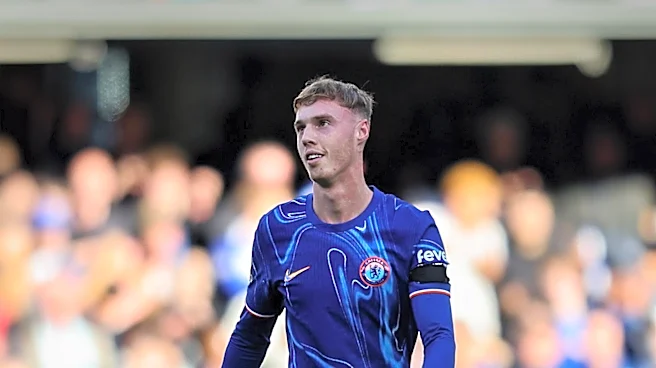
Chelsea footballer Cole Palmer has been unsuccessful in his attempts to trademark his name, 'Cole,' for a range of beauty products and his nickname, 'Cold Palmer,' for beverages. According to The Sun, Palmer applied to the UK’s Intellectual Property Office
to trademark 'Cole' for beauty products, toys, and games. However, Manchester-based Cole Beauty, a company specializing in bath and body brands, opposed the application, leading Palmer's legal team to remove soaps and fragrances from the request. A second dispute has been lodged by London-based luxury clothing manufacturer Cole Buxton Ltd, which is currently ongoing. This is not Palmer's first setback in trademarking efforts; last year, a French vineyard, Chateau Palmer, successfully opposed his application to trademark 'Cold Palmer' for various beverages, including energy drinks, beer, and wine. Palmer's advisers subsequently removed wines from that application to resolve the conflict.
Why It's Important?
This development highlights the complexities and challenges public figures, particularly athletes, face when attempting to monetize their personal brand through trademarking. The opposition from established businesses like Cole Beauty and Chateau Palmer underscores the importance of thorough market research and legal due diligence before pursuing trademark applications. For athletes like Palmer, whose careers are often time-limited, diversifying income streams through personal branding is a significant financial strategy. Failures in trademarking can lead to lost revenue opportunities and increased legal costs. This situation also illustrates the potential for brand confusion and dilution, as existing companies with similar names or products are likely to defend their intellectual property vigorously. The ongoing dispute with Cole Buxton Ltd further emphasizes the persistent hurdles in securing broad trademark protection.
What's Next?
The ongoing dispute with London-based Cole Buxton Ltd regarding the 'Cole' trademark for beauty products, toys, and games will likely continue through legal channels. Palmer's legal team will need to address the concerns raised by Cole Buxton Ltd, potentially by further narrowing the scope of his trademark application or reaching a settlement. Given his previous experience with Chateau Palmer, it is probable that Palmer and his advisors will proceed with greater caution in future branding endeavors. This situation may also prompt other athletes to review their own trademark strategies, ensuring they have robust legal counsel to navigate potential conflicts with existing brands. The outcome of the Cole Buxton Ltd dispute could set a precedent for how similar trademark applications from public figures are handled in the UK.
Beyond the Headlines
Beyond the immediate legal and business implications, this case touches upon the broader cultural phenomenon of celebrity branding and the increasing commercialization of personal identity. In an era where athletes are not just performers but also entrepreneurs, the ability to protect and leverage one's name and image is crucial. This incident also sheds light on the intricate balance between an individual's right to their own name and the intellectual property rights of established businesses. The legal system must navigate these competing interests, often leading to outcomes that shape the landscape of personal branding for years to come. The challenges faced by Palmer could serve as a cautionary tale for other public figures looking to expand their brand into diverse product categories.