








What's Happening?
GE Aerospace has announced its intention to acquire Consolidated Precision Products (CPP), a key castings supplier, for nearly $12 billion. The deal, valued at $11.75 billion, involves purchasing CPP from private investment firms Warburg Pincus and Berkshire
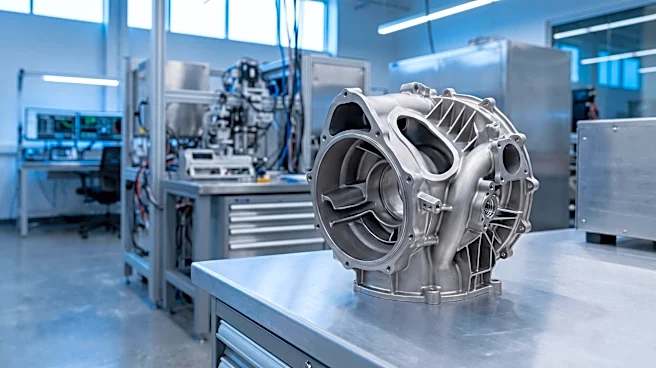
Partners. This acquisition marks GE Aerospace's largest since becoming an independent entity and is driven by a strategic move to enhance in-house manufacturing capabilities and mitigate supply chain risks. According to GE Aerospace CEO Larry Culp, the deal is expected to be accretive to GE's adjusted earnings per share and free cash flow within the first year of combination. CPP is a major producer of investment and precision sand castings, supplying components for a wide range of commercial and military aircraft, weapon systems, and industrial gas turbines. Approximately 70% of CPP's revenue is derived from commercial and defense engines, with the remainder from missiles and power-generation equipment. The transaction is anticipated to close in the second half of 2027, pending regulatory approvals and other customary closing conditions, with Culp expressing confidence that antitrust barriers will not impede the deal.
Why It's Important?
This acquisition is significant for the U.S. aerospace and defense sector, which has been grappling with supply chain bottlenecks, particularly in castings and forgings. By bringing CPP in-house, GE Aerospace aims to gain greater control over a critical segment of the jet-engine supply chain, ensuring more stable and reliable access to essential components. This vertical integration strategy is crucial as engine manufacturers strive to increase output to meet the strong demand for new aircraft and aftermarket spare parts. The deal is also expected to accelerate new engine technologies, especially concerning airfoils, which are vital for improving performance at higher temperatures. The move highlights a broader industry trend where companies are seeking to secure their supply chains and invest in core manufacturing capabilities to support long-term growth and innovation in both commercial and defense applications. The investment in mission-critical casting capacity is seen as essential to support the robust demand across commercial new-make, aftermarket, and defense sectors into the 2030s.
What's Next?
The acquisition is projected to close in the second half of 2027, subject to regulatory approvals and other standard closing conditions. GE Aerospace CEO Larry Culp does not foresee any antitrust obstacles to the completion of the deal. Following the acquisition, GE Aerospace plans to invest hundreds of millions of dollars in related capital expenditures to integrate CPP's operations. This integration will focus on expanding capacity, improving performance, and accelerating the development of new engine technologies. The aerospace industry will be closely watching how this vertical integration impacts GE Aerospace's production timelines and its ability to meet the increasing demand for aircraft engines and components. The move could also prompt other aerospace and defense companies to consider similar strategies to secure their supply chains and enhance manufacturing resilience.
Beyond the Headlines
The acquisition of Consolidated Precision Products by GE Aerospace underscores a fundamental shift in the aerospace and defense industry's approach to supply chain management. The 'war games mode' described by Jefferies analyst Sheila Kahyaoglu for the investment castings market reflects a heightened awareness of vulnerabilities and the strategic importance of critical components. This deal moves beyond simple procurement, representing a deeper commitment to vertical integration and control over manufacturing processes. It highlights the long-term implications of global supply chain disruptions, pushing major players to internalize key production capabilities. Furthermore, the emphasis on accelerating new engine technologies, particularly for airfoils, suggests a strategic play not just for current market demands but also for future innovation and competitive advantage in next-generation aircraft and weapon systems. This could set a precedent for how other large defense contractors and aerospace manufacturers manage their relationships with suppliers and invest in foundational technologies.