






What's Happening?
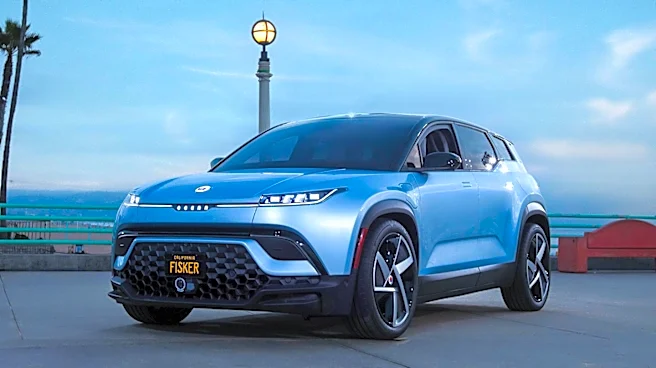
Fisker Inc., an electric vehicle (EV) company co-founded by Henrik Fisker and Geeta Gupta-Fisker in 2016, has filed for Chapter 11 bankruptcy protection in June 2024. The company's primary product was the Fisker Ocean, an all-electric sport utility vehicle.
Fisker Inc. adopted a business model that relied on external manufacturing partners, aiming to reduce upfront investment in production infrastructure. However, this approach made the company dependent on effective coordination with these partners and a reliable production process. The increasingly competitive EV market, coupled with challenges in managing costs, building reliable supply chains, and delivering products on schedule, contributed to the company's financial and operational difficulties. This bankruptcy marks a second such event for Henrik Fisker, following the bankruptcy of Fisker Automotive in 2013.
Why It's Important?
The bankruptcy of Fisker Inc. underscores the significant hurdles faced by new entrants in the electric vehicle industry, even those with compelling designs and promising technology. It highlights that success in the automotive sector requires more than just innovative product concepts; it demands robust production capabilities, substantial and sustained funding, efficient supply chain management, and a viable long-term business model. This event could lead to increased scrutiny from investors and consumers regarding the financial stability and operational viability of other emerging EV manufacturers. For the broader U.S. automotive market, it reinforces the dominance of established automakers and well-capitalized tech giants in the EV space, potentially making it harder for smaller, independent companies to secure funding and market share. The outcome also affects consumers who purchased Fisker Ocean vehicles, raising concerns about warranty support, servicing, and resale value.
What's Next?
Following the Chapter 11 bankruptcy filing, Fisker Inc. will likely undergo a restructuring process aimed at addressing its financial obligations and operational inefficiencies. This could involve selling off assets, seeking new investors, or attempting to reorganize its business model. The future of the Fisker Ocean and any other planned vehicles, such as the PEAR and Alaska models, remains uncertain. It is probable that the company will either be acquired, liquidate its assets, or emerge from bankruptcy with a significantly altered strategy and reduced scope. The impact on existing Fisker Ocean owners will be a key concern, as they may face challenges with vehicle servicing, parts availability, and warranty claims. The broader EV market will continue to observe how this bankruptcy influences investor confidence and the competitive landscape for electric vehicle startups.
Beyond the Headlines
Fisker Inc.'s bankruptcy reflects a deeper trend in the automotive industry: the immense capital and operational complexity required to successfully manufacture and deliver vehicles at scale. While design and technological innovation are crucial, they are insufficient without a strong foundation in production, logistics, and financial management. The company's reliance on external manufacturing partners, while intended to reduce investment, ultimately exposed it to coordination risks and dependencies that proved challenging to navigate in a fast-evolving market. This situation also highlights the intense competition within the EV sector, where even well-known designers struggle against established players and new, well-funded competitors. The experience serves as a cautionary tale for other startups, emphasizing that a compelling vision must be matched by meticulous execution and robust financial planning to achieve long-term sustainability in the capital-intensive automotive industry.