









What's Happening?
Chinese AI startup Moonshot AI has launched the Kimi K3, a new AI model touted as the largest open-weight AI system globally. Despite trailing behind top proprietary models like Anthropic's Claude Fable 5 and OpenAI's GPT-5.6 Sol, Kimi K3 surpasses second-tier
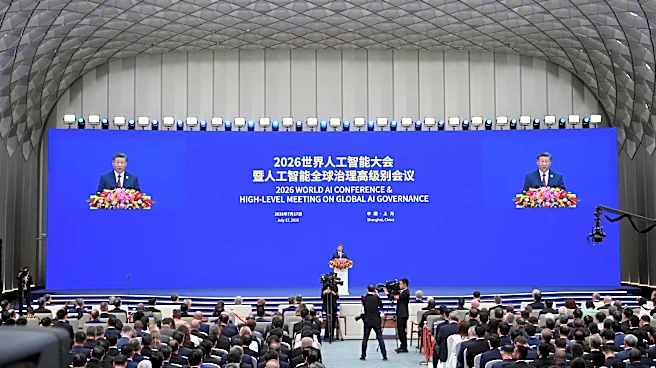
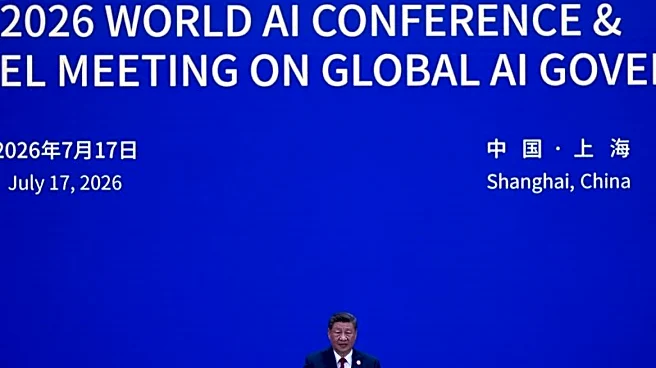
systems such as Claude Opus 4.8 and GPT-5.5 in benchmarks related to coding and agentic tasks. Within a day of its release, Kimi K3 topped Arena's frontend coding leaderboard, outperforming leading U.S. models, and secured third place on Artificial Analysis's Intelligence Index. The release coincides with the 2026 World Artificial Intelligence Conference in Shanghai, highlighting China's progress in closing the gap with U.S. AI systems. Moonshot AI, supported by Alibaba and Tencent, is valued at approximately $31.5 billion, significantly less than the trillion-dollar valuations of Anthropic and OpenAI.
Why It's Important?
The introduction of Kimi K3 by Moonshot AI signifies a notable advancement in China's AI capabilities, challenging the dominance of U.S. AI models. This development could shift the competitive landscape in the AI industry, as Chinese companies continue to innovate and close the technological gap with their American counterparts. The success of Kimi K3 on various benchmarks suggests that Chinese AI models are becoming increasingly competitive, which could lead to more balanced global AI research and development. This shift may impact U.S. companies' market share and influence in the AI sector, prompting them to accelerate their innovation efforts to maintain leadership.
What's Next?
As Moonshot AI's Kimi K3 gains recognition, it is likely to attract more attention from global tech companies and investors. The model's performance could lead to increased collaboration between Chinese and international AI researchers, fostering a more integrated global AI community. U.S. companies may respond by enhancing their AI models and exploring new applications to retain their competitive edge. Additionally, the success of Kimi K3 may encourage further investment in AI research and development in China, potentially leading to more breakthroughs in the field.