







What's Happening?
The concept of a 'Black Swan' event, originally a Latin expression symbolizing an impossibility, has evolved to describe rare, high-impact occurrences that are only explainable in hindsight. In finance, these events represent significant breaks in predictable
patterns, such as crises, technological shifts, or regulatory shocks, for which traditional models lack adequate columns. Author Nassim Nicholas Taleb defines a Black Swan as an event with three traits: rarity, extreme impact, and retrospective explainability, never predictable beforehand. Examples include the collapse of the Soviet bloc, the rise of Hitler, 9/11, or the spread of the Internet. The issue arises because financial tools, built for predictable environments, are applied to markets that are susceptible to extreme, unpredictable events. This leads to an 'illusion of precision' where models read past performance as a guarantee of future outcomes, failing to account for the truly unexpected.
Why It's Important?
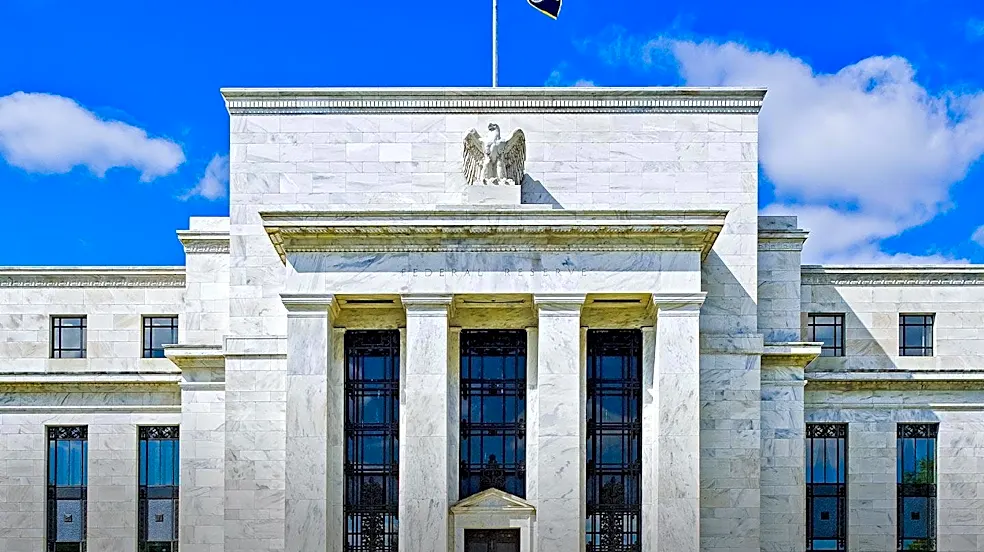
The reliance on financial models that fail to account for Black Swan events has profound implications for U.S. industries and economic stakeholders. Valuation models like Discounted Cash Flow (DCF), risk measures such as Value at Risk (VaR), and backtesting methods are all susceptible to this flaw. DCF models, for instance, extend smooth paths into the future, ignoring potential disruptions. VaR, while identifying loss thresholds, is blind to the extent of extreme losses. Backtesting, which evaluates models against historical data, suffers from the 'turkey's problem,' where a perfect past record misleads about future risks. This systemic underestimation of extreme events can lead to significant financial instability, as seen with the near-collapse of Long-Term Capital Management (LTCM) in 1998. The inability to predict these outliers means that financial institutions and investors are often unprepared for major market shifts, leading to substantial losses and requiring interventions like the Federal Reserve's rescue of LTCM.
What's Next?
Given the inherent limitations of current financial forecasting, a shift in approach is suggested: instead of attempting to predict Black Swans, the focus should be on building resilience and limiting their potential damage. This involves moving away from the question of 'what will happen?' to 'what can we survive?'. Regulators, such as the Basel Committee, have already acknowledged the weaknesses of tools like VaR and proposed alternatives like Expected Shortfall, which averages losses within the tail of extreme events. The financial sector may need to adopt more robust risk management frameworks that account for unpredictability rather than relying on models designed for 'Mediocristan' (predictable environments) in an 'Extremistan' (unpredictable environments) world. This could lead to changes in capital requirements, stress testing methodologies, and investment strategies, emphasizing preparedness for unforeseen shocks over precise, but ultimately flawed, predictions.
Beyond the Headlines
The challenge of Black Swan events extends beyond finance, touching upon a fundamental human desire for certainty. Our inclination to plan and analyze, while beneficial in many contexts, can create a false sense of security when applied to inherently unpredictable systems. The 'narrative fallacy' — the tendency to construct stories that make past events seem obvious and predictable — further exacerbates this issue, preventing a true understanding of randomness. This philosophical underpinning suggests that a deeper cultural shift is needed, moving from an illusion of control to an acceptance of inherent uncertainty. Embracing this perspective could foster more adaptive and resilient systems not only in finance but also in public policy, disaster preparedness, and technological innovation, where the 'rare event' can fundamentally alter trajectories. The wisdom lies not in predicting the future, but in recognizing the limits of our understanding and planning for a world where the unexpected is inevitable.