





What's Happening?
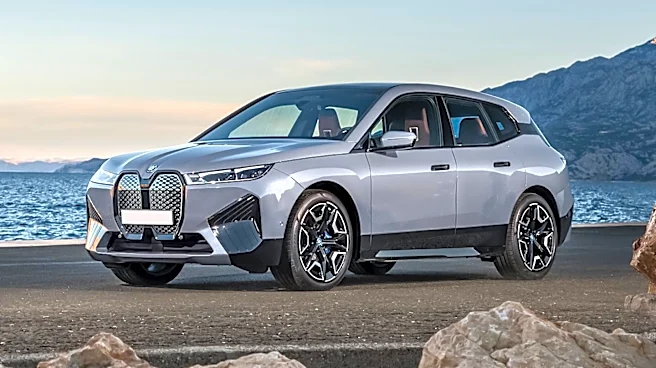
A recent test conducted by Out of Spec Testing revealed that the BMW iX5 electric SUV can travel an additional 21.8 miles (35 kilometers) after its battery display indicates 0% charge. The test involved a pre-series iX5 with nearly 5,000 miles on the odometer.
The experiment began with the battery at approximately 4% state of charge, prompting an electric-range warning. Even at 2% charge, the vehicle maintained about 350 horsepower, a reduction from its 450 hp at 4%, but still substantial. The battery indicator remained at 1% for an extended period before dropping to zero. Once at 0%, the iX5 continued to drive normally for about 8.4 miles, consuming nearly 3 kWh from its reserve. The first significant power reduction occurred at 10.7 miles past zero, but a vehicle restart allowed for further driving. Ultimately, the iX5 consumed an additional 7.4 kWh before completely shutting down, demonstrating a considerable safety net for drivers.
Why It's Important?
This finding is significant for the electric vehicle (EV) market and consumer confidence in EV range. The ability of the BMW iX5 to travel nearly 22 miles beyond a 0% battery reading addresses a common concern among EV owners: range anxiety. This substantial reserve capacity provides a crucial buffer, potentially preventing drivers from being stranded and offering peace of mind. For BMW, this demonstrates a commitment to practical engineering that enhances the user experience, potentially attracting more consumers who are hesitant about EV adoption due to perceived range limitations. It also highlights a design philosophy that prioritizes safety and usability, distinguishing BMW in a competitive EV landscape. The test suggests that manufacturers are incorporating robust safety margins into their EV battery management systems, which could become a new standard or expectation for future electric vehicles.
What's Next?
While the test results are promising, it's important to note that this was a single test under specific conditions, including a relatively warm battery and a pre-series vehicle. Future tests under varying conditions, such as different battery temperatures, ages, and driving styles, would be necessary to fully understand the consistency of this reserve range. BMW and other EV manufacturers may use these findings to further refine their battery management systems and communication to drivers regarding remaining range. Consumers might begin to expect similar safety nets in other EV models, potentially influencing design and marketing strategies across the industry. This could lead to increased transparency from manufacturers about reserve capacities or standardized testing protocols for 'zero-to-empty' range.
Beyond the Headlines
The generous battery reserve in the BMW iX5 touches upon deeper implications regarding trust and user experience in emerging technologies. For many consumers, the transition to electric vehicles involves overcoming psychological barriers related to range and charging infrastructure. A substantial 'hidden' reserve, while not to be relied upon regularly, can significantly alleviate these anxieties, fostering greater trust in EV technology. This approach by BMW could set a precedent for how automotive manufacturers design and communicate the practical limits of their electric vehicles, moving beyond simple displayed range figures to incorporate real-world safety margins. It also raises questions about the optimal balance between maximizing displayed usable range and providing a safety buffer, influencing future battery management software development and driver information systems.