


What's Happening?
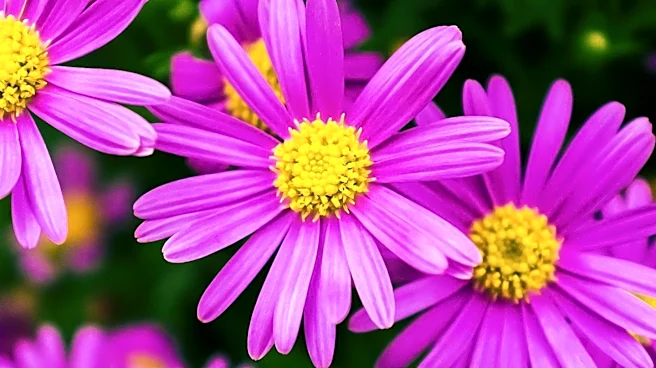
Asters are highlighted as an ideal plant to extend the flowering season into fall, providing vibrant colors and supporting wildlife. These perennials bloom from late August to October, offering a range of colors including purple, pink, white, and blue.
Asters are low-maintenance and attract pollinators such as bees and butterflies, making them a valuable addition to any garden. They thrive in sunny spots with well-draining soil and require consistent watering when first planted. As they establish, asters become moderately drought-tolerant. Gardeners are advised to mulch asters before winter frosts and to deadhead them to prolong their display.
Why It's Important?
Asters play a significant role in maintaining garden biodiversity during the fall, a time when other nectar sources are scarce. By attracting pollinators, they contribute to the health of local ecosystems. Their low-maintenance nature and ability to thrive in various conditions make them accessible to gardeners of all skill levels. Additionally, asters' vibrant colors enhance the aesthetic appeal of gardens, providing a burst of life as other plants begin to fade. This makes them a practical and visually appealing choice for gardeners looking to extend the beauty of their outdoor spaces into the cooler months.