



What's Happening?
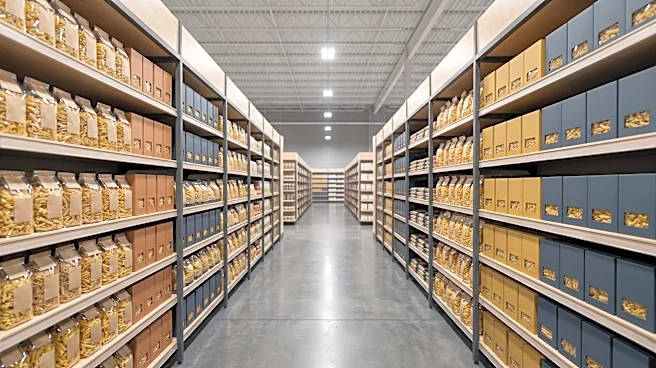
Walmart is encountering significant hurdles in its decade-long, multi-billion-dollar effort to automate its U.S. supply chain buildings. The retail giant aims to replace many of its 140,000 warehouse workers with robots for tasks like unloading trucks,
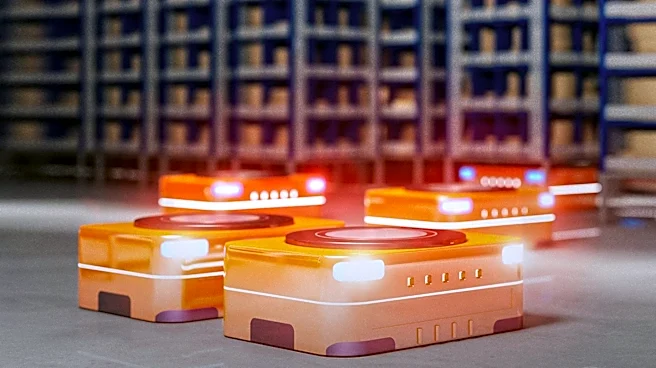
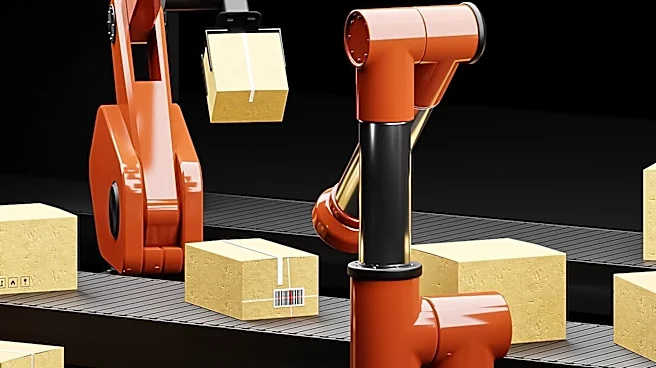
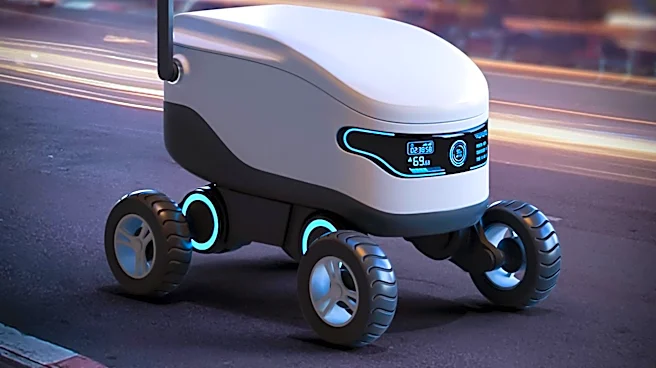
moving pallets, and sorting goods. However, the transition has been marked by what Rob Montgomery, head of supply chain operations for Walmart U.S., describes as 'peak complexity.' Issues include frequent breakdowns of small, wheeled robots, difficulties with sorting machines handling varied items like cardboard boxes and frozen turkeys, and the immense challenge of re-engineering warehouses while they remain operational. Furthermore, automated grocery warehouses are experiencing a substantial increase in utility bills, with monthly costs soaring from approximately $250,000 for manual operations to over $800,000 at peak for automated facilities. Walmart's primary automation partner for nonperishable goods is Symbotic, in which Walmart holds a 12.6% stake. Despite these challenges, executives anticipate that high turnover rates will prevent layoffs, and sales growth could maintain current headcount levels.
Why It's Important?
Walmart's experience underscores the complex realities and substantial costs associated with large-scale industrial automation, particularly in dynamic environments like retail supply chains. The challenges faced by a company of Walmart's scale highlight that the theoretical benefits of robotics, such as increased efficiency, often come with unforeseen operational complexities and significant capital expenditures. The surge in utility costs for automated warehouses also brings into question the overall economic viability and environmental footprint of such transitions, especially as energy prices fluctuate. This situation provides critical insights for other U.S. businesses considering similar automation initiatives, emphasizing the need for meticulous planning, robust technology, and adaptable infrastructure. It also signals potential shifts in the labor market, where the nature of warehouse jobs may evolve rather than disappear entirely, focusing on roles that manage and maintain automated systems.
What's Next?
Walmart is expected to continue refining its automation strategies, focusing on improving robot reliability, optimizing sorting processes for diverse product types, and finding more cost-effective ways to manage increased energy consumption. The company will likely work closely with its automation partners, such as Symbotic, to develop more robust and adaptable robotic solutions. Future developments may include further standardization of packaging to better suit automated systems and innovative approaches to retrofitting existing facilities without disrupting operations. The retail sector will closely watch Walmart's progress, as its success or continued struggles will influence the pace and direction of automation investments across the industry. Additionally, there may be increased focus on training existing staff for new roles in managing automated systems, mitigating potential labor displacement concerns.
Beyond the Headlines
The challenges Walmart faces in automating its warehouses extend beyond immediate operational and financial concerns, touching upon broader implications for the future of work and industrial design. The difficulty robots have with varied items like turkeys and cardboard highlights a fundamental limitation of current automation: its struggle with unpredictability and non-standardized inputs. This suggests that true 'lights-out' automation may remain elusive for complex, real-world supply chains for some time. The significant increase in utility bills also raises questions about the sustainability of energy-intensive automated systems, potentially driving innovation in energy-efficient robotics and warehouse design. Furthermore, the need to re-engineer warehouses while they remain operational points to a critical need for modular and flexible automation solutions that can be integrated incrementally, minimizing disruption and allowing for continuous adaptation. This ongoing evolution will shape how industries approach technological adoption, balancing efficiency gains with practical constraints and long-term sustainability.