
What's Happening?
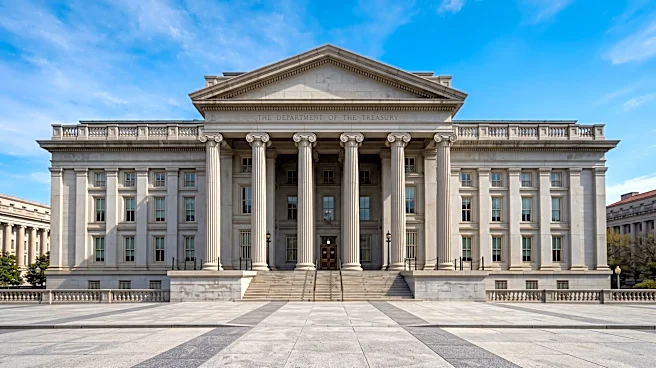
The U.S. Department of Commerce has extended the suspension of the 'Affiliates Rule,' an interim final rule that would expand export restrictions to affiliates of certain listed entities. This measure,
initially published by the Bureau of Industry and Security (BIS) in September 2025, was designed to amend the Export Administration Regulations by applying existing Entity List and Military End User (MEU) List restrictions to foreign entities that are 50 percent or more owned by one or more listed entities. The rule aims to prevent listed entities from circumventing export controls through affiliated companies not explicitly on BIS restricted party lists. The suspension, which was set to expire on November 9, 2026, has now been extended until January 10, 2027. This extension comes as the United States and China continue trade negotiations, following an agreement in September to extend the 'Busan Agreement' until the same date. During this suspension, current Entity List and MEU List restrictions remain in effect, and companies must continue to adhere to existing due diligence obligations for transactions involving items subject to the Export Administration Regulations.
Why It's Important?
The extension of the 'Affiliates Rule' suspension has significant implications for U.S. businesses engaged in international trade, particularly those with operations or supply chains involving entities in China. While the rule's implementation is delayed, it provides companies with additional time to prepare for its potential enforcement. If the rule takes effect in January 2027, businesses will need to integrate ownership-based screening requirements into their compliance procedures, moving beyond simple name-based checks. This shift would necessitate a more thorough examination of counterparty ownership structures, including subsidiaries and second-tier subsidiaries of listed entities. The rule's scope covers exports, reexports, and in-country transfers of items subject to the Export Administration Regulations, encompassing critical technologies like semiconductors, manufacturing equipment, and related technology. Therefore, the delay offers a crucial window for companies to adapt their due diligence processes and supply chain management to mitigate future compliance risks and potential disruptions.
What's Next?
The current suspension of the 'Affiliates Rule' is set to expire on January 10, 2027. Absent a further extension, the rule's implementation will become a live issue immediately after this date. Companies are advised to use this extended period to prepare for the potential reinstatement of the rule, focusing on developing robust ownership-based screening procedures. This preparation includes identifying shareholders and ultimate owners of counterparties and assessing supply chains for any involvement with affiliates of listed entities. While the U.S. has officially extended its suspension, the situation on the Chinese side remains less clear, as the legal text of China's MOFCOM and Customs Announcement No. 70 of 2025, which suspended a rare-earth package, still indicates an end date of November 10, 2026. Businesses will need to monitor both U.S. and Chinese announcements closely for any further extensions or changes to these trade regulations.
Beyond the Headlines
The ongoing suspension and the underlying 'Affiliates Rule' highlight the complex and evolving landscape of U.S. export controls, particularly in the context of strategic competition with China. The rule's intent to prevent circumvention of export restrictions by listed entities through their affiliates underscores a broader U.S. strategy to enhance the effectiveness of its national security and foreign policy controls. The repeated extensions of the rule's implementation suggest a delicate balance between enforcing stringent controls and managing broader trade relations, likely influenced by ongoing diplomatic efforts and economic considerations. This situation also emphasizes the increasing burden on companies to conduct comprehensive due diligence, moving beyond traditional compliance checks to a more in-depth understanding of ownership structures and supply chain intricacies. The potential for the rule to take effect could lead to significant shifts in global supply chain configurations and investment strategies, as companies seek to de-risk their operations from potential U.S. sanctions.