







What's Happening?
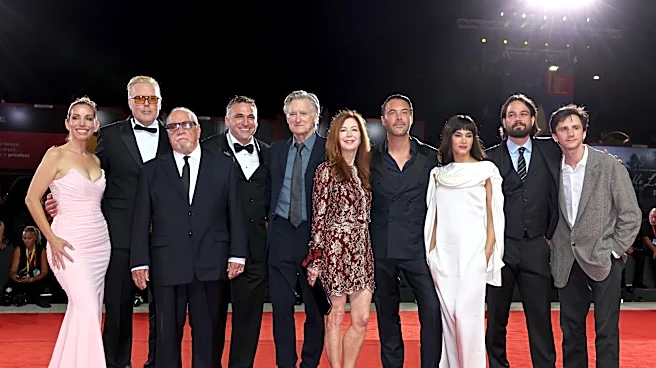
Hirokazu Kore-eda has adapted Tatsuki Fujimoto’s popular Japanese manga 'Look Back' into a new film, which is premiering at the Venice Film Festival. The film follows two girls, Ayumu Fujino and Kyomoto, through their childhood and early adulthood. Fujino,
a popular artist, becomes competitive after seeing the superior work of the reclusive Kyomoto. They eventually become close friends and collaborators, entering manga competitions and exploring the world together. Kore-eda's adaptation is noted for its faithfulness to Fujimoto's original imagery, color palette, narrative, and structure, aligning well with his humanist filmmaking sensibilities. The film explores themes of collaboration, influence, friendship, silence, and patience, though it also ventures into darker territory in its finale.
Why It's Important?
This adaptation is significant as it marks a notable director, Hirokazu Kore-eda, engaging with a popular manga, potentially bridging different forms of storytelling and attracting diverse audiences. Kore-eda's reputation as a humanist filmmaker suggests a nuanced exploration of the characters' emotional and psychological journeys, which could elevate the source material. The film's themes of artistic collaboration, overcoming social anxiety, and the impact of influence resonate broadly, offering insights into creative processes and personal growth. Its premiere at the Venice Film Festival highlights its artistic merit and potential to gain international recognition, further solidifying Kore-eda's standing in modern cinema and introducing his work to new viewers who may be fans of the original manga.
What's Next?
Following its premiere at the Venice Film Festival, 'Look Back' is expected to be screened at other international film festivals and potentially released to a wider audience. Its reception by critics and audiences will determine its reach and potential for awards. The film's success could encourage more adaptations of popular manga by acclaimed directors, further blurring the lines between different media. Discussions will likely focus on Kore-eda's interpretation of the source material, particularly the film's structural and stylistic choices in the finale, and how they contribute to the overall narrative and emotional impact.
Beyond the Headlines
The film's exploration of collaboration and influence delves into the deeper psychological and social aspects of artistic creation. It highlights how individuals, even those with contrasting personalities like the ambitious Fujino and the reclusive Kyomoto, can inspire and shape each other's development. The narrative's journey into 'grisly places' and its use of an alternate timeline in the finale suggest a profound commentary on fate, choice, and the enduring impact of relationships. This could prompt audiences to reflect on the nature of mentorship, the challenges of creative expression, and the often-unseen forces that drive personal and artistic evolution, making it a rich subject for cultural and psychological analysis.