





What's Happening?
Muon Space, a California-based satellite manufacturer, has successfully raised $250 million in a Series C funding round. This significant investment is intended to fuel the company's expansion into larger, more powerful spacecraft and constellations.
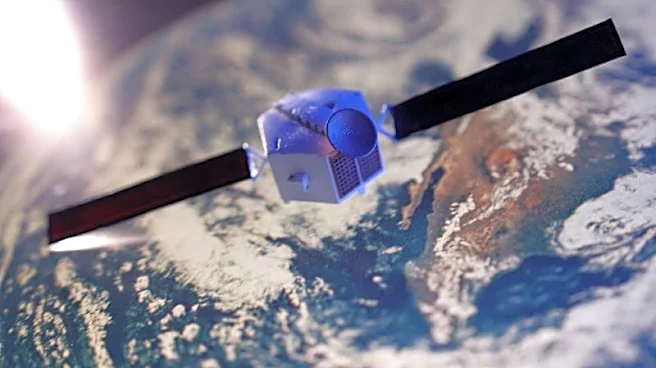
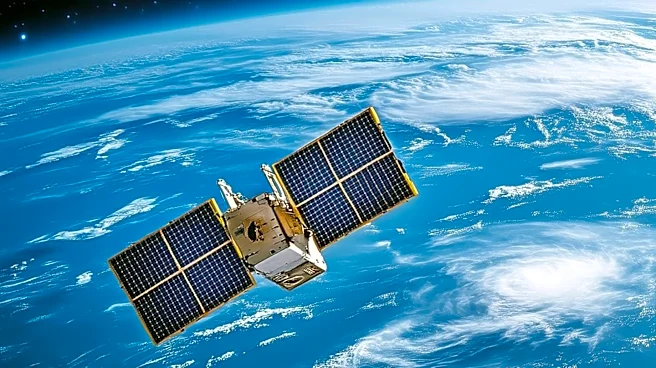
The funding round was led by Eclipse Capital. Muon Space, a five-year-old startup, has already deployed 11 satellites, including three this year for a low Earth orbit wildfire-monitoring system developed in partnership with the Earth Fire Alliance. The company currently has over 50 satellites in development for various customers, with 13 scheduled for launch in the next year. Muon Space recently opened a new manufacturing facility in San Jose, designed to increase its production capacity tenfold to 500 satellites annually by 2027. This capital injection brings Muon's total equity funding to over $386 million, supporting its vertical integration strategy, which includes the acquisition of propulsion startup Starlight Engines last year.
Why It's Important?
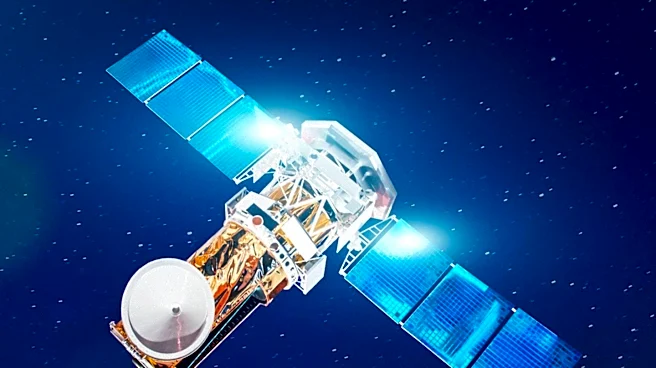
This substantial funding round is a strong indicator of the growing investor confidence in the commercial space sector, particularly in satellite manufacturing and constellation development. For Muon Space, it means accelerated growth, enabling the company to scale its production capabilities and develop more advanced satellite platforms, such as the 500-kilogram MuSat XL and the larger Condor-Ultra. This expansion will allow Muon Space to meet the increasing demand for space-based intelligence, communications, and computing, serving both commercial and government customers. The company's focus on vertical integration, controlling 95% of its spacecraft production in-house, positions it to offer highly optimized and customized solutions, potentially disrupting traditional satellite manufacturing models. This investment also contributes to the broader U.S. space economy, fostering innovation and creating high-tech jobs in California's satellite manufacturing hub.
What's Next?
With the new capital, Muon Space plans to ramp up its satellite production significantly, aiming for 500 satellites per year by 2027 from its San Jose facility. The company is set to deploy its first 500-kilogram MuSat XL spacecraft next year for Hubble Network, a venture planning a 60-strong constellation to connect Bluetooth devices globally. Muon also intends to debut its even larger Starship-class platform, Condor-Ultra, by 2028, which is designed for orbital data centers. The company will continue to pursue its 'Mission Foundry' model, optimizing entire systems around customer requirements rather than predefined satellite buses. This approach, combined with its vertical integration, will allow Muon Space to cater to a diverse range of complex missions and expand its customer base, including recently signed commercial and U.S. government clients yet to be announced.
Beyond the Headlines
Muon Space's successful funding round and ambitious expansion plans highlight a significant trend in the commercial space industry: the shift towards larger, more powerful, and highly integrated satellite platforms. This move reflects the increasing demand for sophisticated in-orbit capabilities, such as orbital data centers and advanced environmental monitoring. The company's 'Mission Foundry' approach, which prioritizes customer mission requirements over standardized bus designs, could become a new paradigm in satellite manufacturing, offering greater flexibility and optimization. Furthermore, the valuation of Muon Space at $1.5 billion, joining other 'space unicorns,' underscores the rapid growth and investment potential within the sector. This influx of private capital is crucial for driving innovation, reducing the cost of access to space, and ultimately enabling a wider range of space-based services that can benefit various industries on Earth, from agriculture to defense.