



What's Happening?
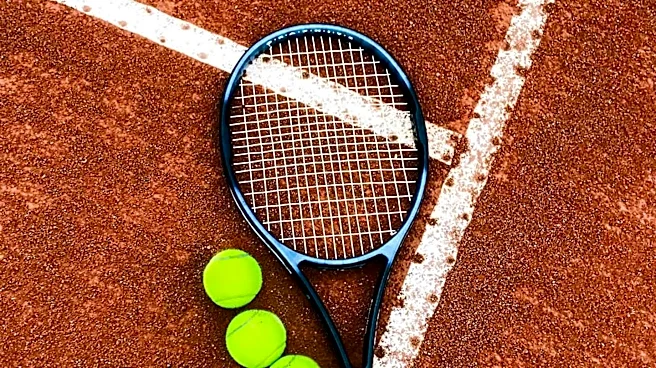
Solo tennis training can be effectively conducted using a variety of equipment, catering to different training goals and budgets. The available tools are categorized into four main groups: existing rackets and balls, walls or rebounders, ball machines,
and small practice aids. A wall or rebounder provides immediate feedback on contact and direction, serving as a foundational tool for rhythm and consistency. Ball machines offer controlled feeds with adjustable speed, spin, placement, and interval, allowing for varied shot practice that is difficult to replicate with a wall alone. Small practice aids, such as serve targets, ball hoppers, and target cones, help focus training sessions on specific skills like placement and repetition. The selection of equipment should align with individual training problems, starting with basic tools and progressively adding more advanced options as needed. For instance, a rebounder is a low-cost option, while a training machine falls into the mid-range, and smart machines with upgrade paths represent the higher end of the spectrum.
Why It's Important?
The availability of diverse solo tennis training equipment is important for players who may not have consistent access to a hitting partner or a coach. This equipment allows individuals to maintain and improve their skills independently, making tennis more accessible and sustainable as a sport. For recreational players, it provides a flexible way to practice without scheduling conflicts, while for more serious athletes, it offers a means to supplement coached sessions with high-volume, focused drills. The tiered approach to equipment, from low-cost walls to advanced ball machines, ensures that players at all financial levels can find suitable tools to enhance their game. This accessibility can contribute to broader participation in tennis and help players develop specific aspects of their technique, such as consistency, shot variety, and serve accuracy, which are crucial for overall performance.
What's Next?
Players looking to enhance their solo training should first identify their weakest skill or specific training problem. Based on this assessment, they can then select the most appropriate equipment. For instance, if consistency and timing are issues, a wall or rebounder would be a suitable starting point. If controlled volume, spin variety, and movement are desired, a ball machine would be the next logical step. The market for solo training equipment is likely to continue evolving, with advancements in smart machines offering features like vision tracking and performance analysis. Before purchasing, players should verify pricing and features on official product pages and consider factors like portability, battery life, and the availability of app control for convenience. The key is to build a practice system incrementally, adding tools only when they address a specific need and contribute to a structured training regimen.
Beyond the Headlines
The rise of sophisticated solo training equipment reflects a broader trend in sports towards personalized and data-driven practice. While solo equipment cannot fully replicate the tactical feedback of a live opponent or the nuanced guidance of a coach, it empowers players to take greater ownership of their development. This shift can foster a more analytical approach to training, as players learn to identify their weaknesses and select tools that provide targeted solutions. The integration of technology, such as app control and performance analytics in ball machines, also highlights how digital tools are transforming traditional sports training. This could lead to a future where solo practice is not just about repetition but also about intelligent, adaptive training informed by real-time data, ultimately enhancing player development and engagement in the sport.