







What's Happening?
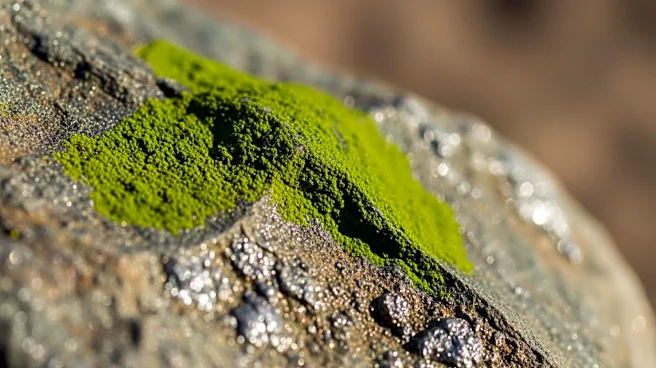
Bioleaching, a process that uses microorganisms to extract metals from ores and waste materials, is gaining renewed interest in the mining industry. This method offers an alternative to traditional energy-intensive processes like crushing and smelting.
Recent advancements in molecular biology have expanded the range of microorganisms that can be used, allowing for more targeted extraction of specific metals. Industry experts, including Priit Joers of BiotaTec and Ross Orr of BacTech, highlight the potential of bioleaching to process mining waste and end-of-life industrial waste streams. Despite its promise, bioleaching has not yet achieved widespread adoption, with challenges remaining in scaling up the technology for full commercial implementation.
Why It's Important?
The resurgence of interest in bioleaching is significant as it aligns with the mining industry's need to address declining ore grades and the increasing demand for critical minerals. Bioleaching offers a more sustainable and environmentally friendly approach by reducing energy consumption and emissions. It also presents an opportunity to recover valuable metals from historical waste deposits, which could enhance supply chain security for critical raw materials. The technology's ability to process legacy waste streams could transform previously uneconomic materials into viable resources, supporting the industry's shift towards more sustainable practices.
What's Next?
The future of bioleaching depends on bridging the gap between its technical potential and commercial deployment. Industry leaders and policymakers are recognizing its potential to unlock critical raw materials while addressing environmental concerns. The focus will be on integrating bioleaching with existing processing infrastructure to facilitate its adoption. As demand for critical minerals grows, the mining sector may increasingly turn to bioleaching as a viable solution. Continued advancements in biology and technology will be crucial in moving bioleaching into mainstream use.