






What's Happening?
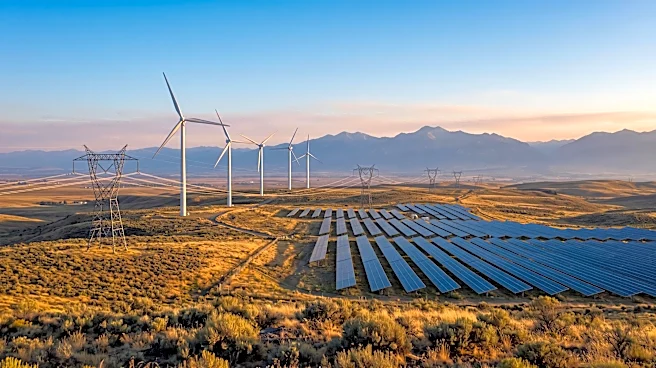
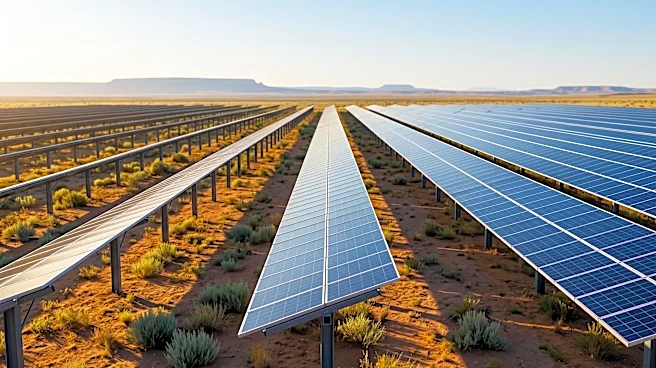
Ørsted has commenced construction on its Blackwater Solar project, a new 200 MW solar facility located in Roosevelt County, New Mexico. This development marks Ørsted's inaugural project in the state and is a key component of its broader U.S. onshore renewable
energy expansion. The company's Americas Onshore business currently manages over 6 GW of operational wind, solar, and battery storage capacity across eight states. This new solar farm contributes to Ørsted's diverse portfolio, which also includes significant offshore wind projects in the UK and the German North Sea. The initiation of Blackwater Solar has drawn investor attention, with a 1-day share price return of 3.30% and a year-to-date gain of 8.95%, despite a 5-year total shareholder return that is down 68.78%. The market currently values Ørsted's stock at a price-to-sales (P/S) ratio of 2.2x, which is notably below its peer group average of 12.7x and the broader European renewable energy industry average of 2.5x, suggesting the stock may be undervalued according to some analyses.
Why It's Important?
The Blackwater Solar project is important for several reasons, primarily its contribution to the U.S. renewable energy landscape and its potential impact on the energy market. By adding 200 MW of solar capacity, Ørsted is helping to diversify the national energy mix, reduce reliance on fossil fuels, and advance the country's clean energy goals. This project also signifies economic development in New Mexico, potentially creating jobs and stimulating local economies through construction and operation. For Ørsted, this expansion reinforces its position as a major player in the U.S. renewable energy sector, demonstrating its commitment to growth in onshore assets. The perceived undervaluation of Ørsted's stock, as indicated by its P/S ratio compared to industry averages, suggests that investors may be cautious despite the company's expansion efforts and analyst forecasts for future earnings growth. This could present an opportunity for long-term investors interested in the renewable energy sector, but also highlights the inherent risks associated with the capital-intensive nature of large-scale energy projects and potential market volatility.
What's Next?
The construction of the Blackwater Solar project will proceed, with an anticipated timeline for completion and commercial operation. As the project progresses, it will be crucial to monitor its integration into the regional power grid and its contribution to New Mexico's energy supply. For Ørsted, the success of Blackwater Solar could influence future investment decisions and further expansion into other U.S. states. The company will likely continue to focus on optimizing its portfolio and addressing the market's cautious valuation, potentially through demonstrating consistent revenue growth and moving towards profitability within the projected three-year timeframe. Investors will be closely watching Ørsted's financial performance, particularly its ability to convert its substantial revenue into positive earnings, which is a key factor in closing the valuation gap. The broader U.S. renewable energy sector will also observe the project's impact as a benchmark for future solar developments, especially in states like New Mexico that are increasingly embracing clean energy initiatives.
Beyond the Headlines
The Blackwater Solar project's initiation extends beyond immediate energy production, touching upon broader themes of energy independence, environmental sustainability, and technological advancement. The expansion of solar energy infrastructure in states like New Mexico contributes to the decentralization of power generation, enhancing grid resilience and reducing vulnerability to single points of failure. Environmentally, each new solar project helps mitigate climate change by reducing greenhouse gas emissions associated with traditional power sources. Furthermore, the project underscores the ongoing technological evolution in renewable energy, with continuous improvements in solar panel efficiency and energy storage solutions. The market's cautious approach to valuing renewable energy companies like Ørsted, despite their growth and environmental benefits, highlights the complex interplay between long-term sustainability goals and short-term financial metrics. This tension often reflects the significant upfront capital investment required for such projects and the regulatory and policy uncertainties that can influence their profitability, prompting a deeper discussion on how to align financial incentives with environmental imperatives in the energy transition.