





What's Happening?
Sardinia, an Italian island in the Mediterranean, is being recognized for its exceptional beaches, cuisine, heritage, and urban excitement, positioning it as a top European destination. Despite its appeal, it remains less frequented by British holidaymakers
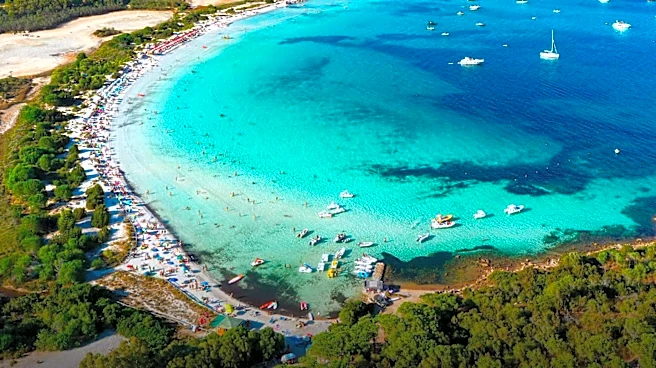
compared to popular Greek islands like Santorini, Corfu, and Rhodes, or Spanish islands such as Tenerife and Majorca. The island boasts a remarkable number of gorgeous beaches, with two Sardinian shores recently featuring in a compilation of the world's 50 most beautiful beaches, one claiming the second position overall. Sardinia offers diverse experiences, from the vibrant city of Cagliari in the south to the thriving town of Alghero in the north, and luxury resorts like Porto Cervo on the Costa Smeralda. Its culinary scene is highly praised, with many restaurants catering to locals, ensuring high standards.
Why It's Important?
The increasing recognition of Sardinia as a premier beach destination, particularly in contrast to overcrowded Greek and Spanish islands, highlights a shift in European tourism preferences. This development is significant for the U.S. travel market as it offers an alternative for travelers seeking high-quality, less congested European experiences. For the U.S. travel industry, promoting Sardinia could tap into a segment of travelers looking for luxury, authentic culinary experiences, and stunning natural beauty without the mass tourism often associated with more popular Mediterranean destinations. This could lead to diversified travel packages and increased interest in less conventional European itineraries, potentially drawing tourism away from over-saturated areas and contributing to a more balanced global tourism economy.
What's Next?
As Sardinia gains more international recognition, it is likely to attract an increasing number of tourists, including those from the U.S. The island's tourism sector may see further development to accommodate this growth, while potentially aiming to maintain its less crowded appeal compared to other Mediterranean hotspots. Travel agencies and tour operators might begin to feature Sardinia more prominently in their offerings, emphasizing its unique combination of natural beauty, culture, and gastronomy. However, the island's popularity could also lead to challenges similar to those faced by other destinations, such as potential overcrowding during peak months like July and August, particularly in sought-after areas like the Costa Smeralda. Efforts to manage tourism growth sustainably will be crucial to preserve Sardinia's distinctive charm.
Beyond the Headlines
Sardinia's rise as a top destination underscores a broader trend in travel where discerning tourists are actively seeking out destinations that offer a blend of exclusivity, authenticity, and natural beauty, often away from the well-trodden paths. This reflects a growing desire for unique and immersive experiences rather than simply visiting famous landmarks. The island's ability to maintain a local-centric culinary scene, even amidst growing tourism, speaks to its cultural resilience and commitment to quality. This trend could influence how destinations are marketed and developed globally, encouraging a focus on preserving local character and offering genuine experiences. It also highlights the economic benefits of diversifying tourism offerings beyond a few iconic locations, distributing wealth more broadly and fostering sustainable growth.