





What's Happening?
A U.S. couple, Ashley W. and her husband, utilized data from their Oura Ring to successfully conceive after facing difficulties and an initial diagnosis of PMOS (formerly PCOS). Ashley was diagnosed with PMOS, a condition that can cause irregular ovulation
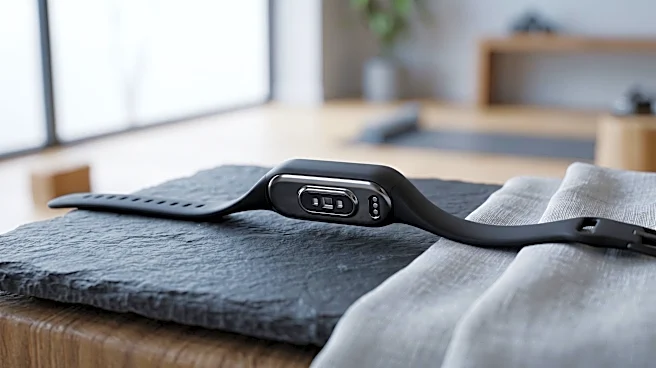
and make traditional at-home ovulation tests unreliable due to potentially higher baseline luteinizing hormone (LH) levels. Seeking an alternative method to understand her body's ovulation patterns, Ashley turned to the Oura Ring, which continuously measures skin temperature during sleep. She analyzed seven months of her temperature data, identifying a consistent monthly spike that indicated her ovulation period. This discovery allowed the couple to time their conception attempts more effectively, leading to a successful pregnancy after one month of following this new schedule. The Oura Ring's ability to detect subtle temperature shifts, often less than a degree, proved crucial in identifying a consistent ovulation pattern that traditional methods could not reliably provide for her condition.
Why It's Important?
This case highlights the growing role of wearable health technology in personal health management, particularly in areas like reproductive health where traditional methods may fall short for individuals with specific conditions. For couples facing fertility challenges, especially those with diagnoses like PMOS, the Oura Ring offers a non-invasive, data-driven approach to understanding their bodies' cycles. This can empower individuals to take a more active role in their fertility journey and potentially reduce the emotional and financial burden associated with prolonged conception attempts. The story also underscores the importance of continuous, passive data collection in identifying subtle physiological patterns that might be missed with intermittent measurements. While Oura is not a medical device and should not be used as birth control, its utility in providing actionable insights for personal health decisions, such as timing conception, demonstrates a significant impact on individual well-being and family planning.
What's Next?
As Ashley progresses through her pregnancy, she continues to use the Oura App to monitor other health metrics, including sleep consistency, stress levels, and heart rate, utilizing features like Pregnancy Insights. This indicates a continued integration of wearable technology into various stages of life, beyond just conception. For Oura and similar health tech companies, this success story could further drive interest and adoption among individuals seeking to understand their bodies better, particularly in reproductive health and overall wellness. Future developments might include more refined algorithms for cycle tracking, enhanced integration with healthcare providers (while maintaining the device's non-medical status), and expanded features tailored to different life stages, such as postpartum recovery. The ongoing collection of personal health data through such devices is likely to inform future research and personalized health strategies, potentially leading to more tailored advice and support for users.
Beyond the Headlines
This narrative touches upon broader implications concerning the intersection of personal data, technology, and healthcare autonomy. The ability of individuals to gather and interpret their own physiological data empowers them with knowledge that can influence significant life decisions, such as family planning. It also raises questions about the evolving definition of 'healthcare' and the role of consumer-grade devices in bridging gaps where traditional medical approaches may be less effective or accessible. The case implicitly highlights the shift towards proactive health management, where individuals leverage technology to gain insights into their bodies before seeking medical intervention. Furthermore, it underscores the ethical considerations surrounding data privacy and the responsible use of personal health information collected by wearable devices, even as they offer profound benefits in personal health journeys. The story also subtly points to the impact of lifestyle factors, like stress, on physiological processes, as Ashley observed immediate improvements in her sleep data after leaving a high-pressure job.