







What's Happening?
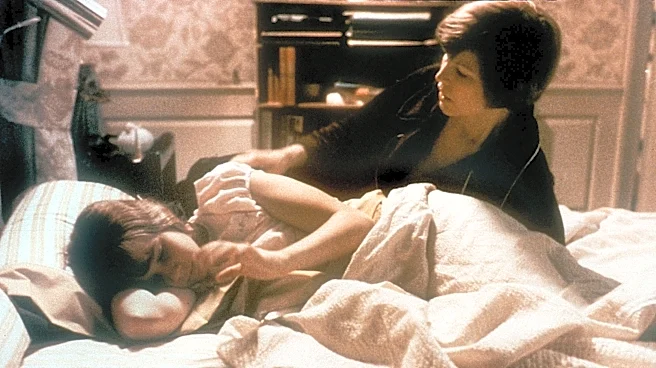
Mike Flanagan's 2016 film 'Ouija: Origin of Evil' is highlighted as a successful prequel that revitalized a critically panned horror franchise. The article delves into how Flanagan, known for his artistic approach to horror, managed to create a genuinely
scary PG-13 film by drawing inspiration from 1960s and 1970s horror cinema, including 'The Changeling' and 'The Exorcist.' The film utilized old-school filmmaking techniques like antique lenses, 'cigarette burns,' and zooms to evoke a period feel. The narrative of 'Ouija: Origin of Evil' is set in 1967 Los Angeles, focusing on a widowed mother and her daughters who run a seance scam, accidentally contacting a malevolent spirit through a Ouija board. The article also extensively covers the real-world history of the Ouija board, from its origins in 19th-century spiritualism and commercialization by the Kennard Novelty Company in 1890, to its association with demonic possession after 'The Exorcist' in 1973, and its connection to several real-life crimes.
Why It's Important?
This exploration is important for understanding the evolution of horror cinema and the cultural impact of objects like the Ouija board. Flanagan's success with 'Ouija: Origin of Evil' demonstrates that creative vision and a deep understanding of genre conventions can elevate even commercially driven sequels into critically acclaimed works. It highlights how filmmakers can use historical context and stylistic choices to create effective horror without relying solely on gore or jump scares. Furthermore, the detailed history of the Ouija board reveals how a product initially marketed as harmless entertainment became deeply intertwined with societal fears, spiritual beliefs, and even criminal acts. This cultural shift, largely influenced by media like 'The Exorcist,' showcases the power of film to reshape public perception and create lasting associations, impacting how certain objects are viewed and feared within society.
What's Next?
While 'Ouija: Origin of Evil' was a critical and commercial success, earning over $81 million worldwide on a $12 million budget, it did not lead to further official sequels from Flanagan. The article suggests that the film achieved its peak potential within the franchise, and further installments would likely devolve into cash-grab territory. The legacy of the film, however, continues to influence horror filmmaking, particularly in its approach to prequels and the use of period-specific aesthetics. The Ouija board itself remains a cultural artifact with enduring fascination, continuing to appear in horror narratives and discussions about the paranormal. Its scientific explanation, the ideomotor phenomenon, continues to be explored, but the board's mystique and association with the unknown persist in popular culture.
Beyond the Headlines
The story of 'Ouija: Origin of Evil' and the Ouija board delves into deeper implications concerning the human psyche, belief systems, and the power of suggestion. The board's history reflects a societal need for connection with the unknown, particularly during times of grief or uncertainty, as seen during the Civil War and World Wars. The shift in its perception from a parlor game to a sinister object after 'The Exorcist' illustrates how cultural narratives can profoundly influence collective consciousness and even trigger moral panics. The connection of the Ouija board to real-life crimes, while not implying supernatural causation, highlights how individuals can use such objects to rationalize violent acts, deflect blame, or manipulate others, touching upon the psychological vulnerabilities that can be exploited by belief in external forces. This interplay between entertainment, belief, and human behavior offers a rich area for sociological and psychological study.