







What's Happening?
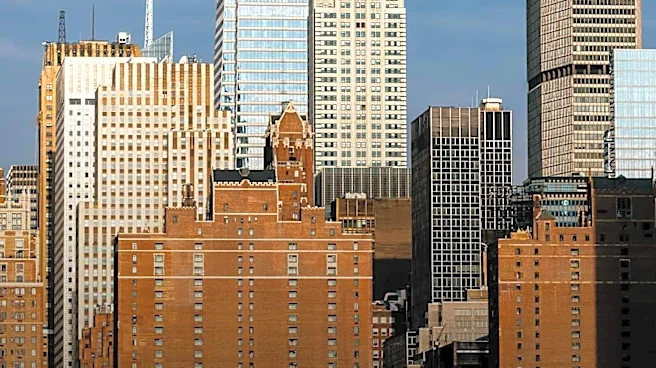
Manhattan's office leasing market is experiencing its strongest growth in over two decades, with demand reaching unprecedented levels. According to a report by Colliers, a commercial real estate services firm, the second quarter of the year saw 11.02
million square feet of office leasing, marking a 29.4% increase over the five-year quarterly average and a 31.3% rise over the 10-year average. This surge in demand is attributed to a combination of return-to-office movements and increased interest from industries such as technology, artificial intelligence, legal, media, and financial services. The report highlights that this is the first time since 2002 that demand has exceeded 11 million square feet for three consecutive quarters. Additionally, asking rents have experienced the largest mid-year annual growth since 2016. The market is also seeing a shift with more buildings being converted to non-office uses, and a notable increase in leasing activity from Class B buildings, which have seen a 14% rise from pre-pandemic levels.
Why It's Important?
The resurgence in Manhattan's office leasing market is a significant indicator of economic recovery and confidence in the commercial real estate sector. The increased demand from key industries suggests a robust return to office spaces, which could have positive implications for the local economy, including job creation and increased business activity. The shift towards Class B buildings indicates a broader recovery beyond just high-end properties, suggesting a more inclusive market rebound. This trend could lead to increased investment in office infrastructure and potentially drive further urban development. The conversion of office spaces to other uses also reflects a flexible approach to real estate utilization, which could address housing shortages or boost hospitality sectors.
What's Next?
As the demand for office space continues to grow, stakeholders in the real estate market may focus on further conversions of office buildings to residential or hospitality uses to meet changing market needs. The ongoing interest from industries like tech and AI could lead to more specialized office developments catering to these sectors. Additionally, the trend of Class B buildings gaining favor may encourage property owners to invest in upgrades and renovations to attract tenants. Policymakers and urban planners might also consider strategies to support this growth while balancing the needs for residential and commercial spaces in Manhattan.