






What's Happening?
Ukraine is being proposed as a significant storage and distribution hub for American liquefied natural gas (LNG) in Central and Eastern Europe. Stephen Blank, a senior fellow at the Foreign Policy Research Institute, suggests that western Ukraine's underground
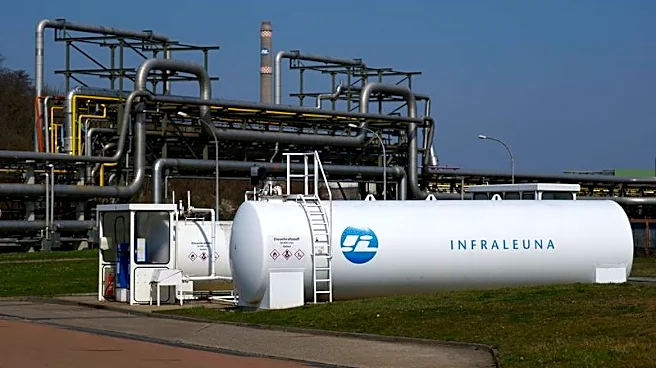
gas storage facilities, with a total capacity of 30.95 billion cubic meters, could support expanded U.S. gas supplies to the region. This proposal comes as Russian attacks have severely impacted Ukraine's domestic gas production capacity, with up to 60% reportedly knocked out in 2025. Ukraine has already contracted substantial volumes of U.S. LNG for 2025 and the first quarter of 2026, developing supply routes through terminals in Poland, Lithuania, Germany, and Greece. Naftogaz, Ukraine's state-owned energy company, has secured deals, including 300 million cubic meters of U.S. gas from Poland's ORLEN for early 2026 and its first U.S. LNG supply via Germany's Rügen terminal.
Why It's Important?
This initiative holds significant importance for U.S. energy strategy and European energy security. By leveraging Ukraine's vast storage capabilities, the U.S. could solidify its role as a key energy provider to Europe, particularly in a region seeking to reduce its reliance on Russian gas. For Ukraine, becoming a gas storage partner for the Three Seas Initiative would enhance its strategic importance and provide a stable revenue stream, aiding its post-conflict economic recovery. It also offers a solution to Ukraine's increased dependence on imported gas due to Russian aggression. The proposal could strengthen energy ties between the U.S. and its European allies, fostering greater energy independence and resilience across the continent. However, the success of this plan hinges on addressing significant security and logistical challenges, including the ongoing conflict and the need for substantial investment and sustained U.S. institutional support.
What's Next?
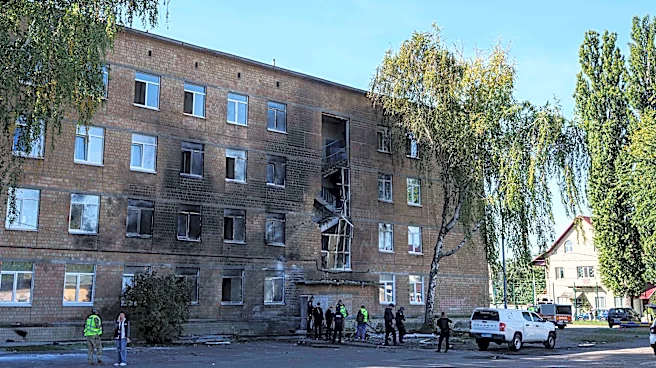
The feasibility of Ukraine becoming a major U.S. gas storage hub will depend on several factors. Addressing security concerns is paramount, as Russian attacks have already targeted Ukrainian energy infrastructure, including a Naftogaz storage facility in March 2024. While deep underground reservoirs offer some protection, the surface infrastructure remains vulnerable. Significant investment will be required to upgrade and secure these facilities, as well as to ensure efficient logistical connections to European markets. The level of U.S. institutional support will also be crucial, though the current administration's willingness to provide such support is uncertain. Further discussions and agreements between Ukraine, the U.S., and European partners will be necessary to develop a comprehensive plan for implementation, including financial commitments and security guarantees. The ongoing conflict and its resolution will heavily influence the timeline and viability of this proposal.
Beyond the Headlines
Beyond the immediate economic and energy security implications, this proposal touches upon deeper geopolitical considerations. It represents a strategic move to counter Russian influence in the European energy market and reinforce the transatlantic alliance. By integrating Ukraine more deeply into the European energy infrastructure, it could serve as a powerful symbol of Western commitment to Ukraine's sovereignty and future. The initiative also highlights the evolving nature of energy geopolitics, where energy resources are increasingly used as tools of foreign policy. The ethical dimension involves balancing the economic benefits of such a partnership with the inherent risks of operating in a conflict zone. Furthermore, the long-term success of this venture could set a precedent for future energy collaborations in volatile regions, emphasizing the importance of resilient infrastructure and diversified supply chains in an unpredictable global landscape.