




What's Happening?
U.S. commercial real estate investment activity is forecasted to rise by 16% in 2026, reaching $562 billion, according to CBRE. This projection nearly matches the annual average observed between 2015 and 2019. The commercial real estate sector involves
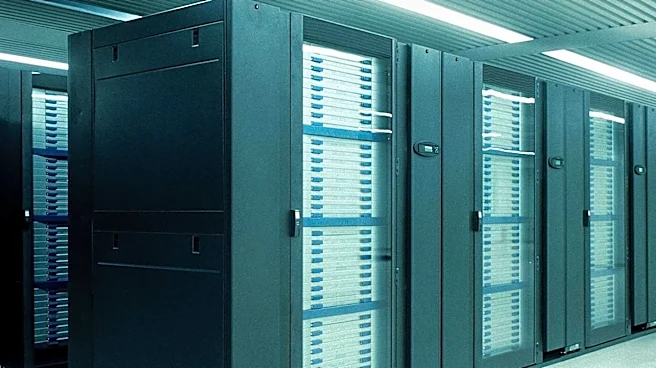
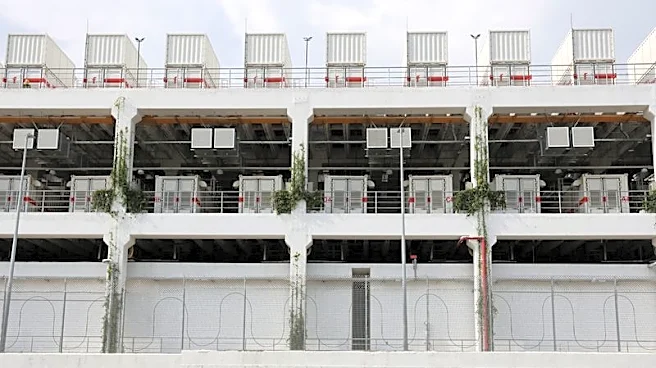
evaluating economic, physical, and financial attributes of various properties, including office buildings and retail centers. This anticipated increase signifies a recovering market, which is expected to create more opportunities. However, this recovery also brings increased competition in market commentary. The market is characterized by high-consequence, research-heavy decisions for buyers considering leasing, acquiring, financing, developing, selling, or holding properties. Firms that can effectively translate market movements into actionable explanations are better positioned to earn trust from clients. Additionally, there is a notable scarcity in the data center market, with primary-market data center vacancy falling to 1.4% in the first half of 2026, and 80.4% of under-construction capacity already preleased.
Why It's Important?
The projected 16% increase in U.S. commercial real estate investment activity for 2026 is significant for the national economy, indicating a robust recovery in a sector that underpins numerous industries. This growth suggests renewed confidence among investors and could lead to increased development, job creation, and economic stability. The scarcity in the data center market, with extremely low vacancy rates and high pre-leasing activity, highlights the critical demand for digital infrastructure. This demand is driven by the rapid expansion of technology and artificial intelligence, necessitating substantial investment in specialized facilities. For businesses, this means potential challenges in securing data center space, possibly leading to higher costs or delays in expansion. For investors, the data center sector presents a lucrative opportunity, but also requires specialized knowledge due to its unique infrastructure and power requirements. The overall market recovery, while positive, also intensifies competition among firms, emphasizing the need for clear, evidence-based market analysis to attract and retain clients.
What's Next?
The commercial real estate market is expected to continue its recovery trajectory, with a focus on specialized asset classes like data centers. JLL estimates that nearly 100 GW of new data center capacity may be added between 2026 and 2030, requiring approximately $3 trillion in investment, with AI potentially accounting for half of the workloads by 2030. This indicates a sustained boom in AI infrastructure demand, which will influence power, land, infrastructure, leasing, and investment decisions. Firms will need to develop content that explains local conditions to non-local capital, publishing investor briefs with market maps, currency/financing context, supply, demand, risks, and local execution proof. The market will also see continued emphasis on efficiency, addressing supply shortages, and integrating AI implementation. Future-facing content will need to connect macro forces to specific market and asset-level consequences, potentially through recurring market series that track changes, impacts, uncertainties, and future trends.
Beyond the Headlines
The surge in commercial real estate investment, particularly in data centers, points to a deeper transformation driven by technological advancements and the increasing reliance on digital infrastructure. This shift has profound implications beyond mere financial transactions, influencing urban planning, energy consumption, and environmental sustainability. The massive investment required for new data center capacity raises questions about the availability of power, land, and fiber infrastructure, potentially leading to increased competition for resources and higher utility costs. Furthermore, the specialized nature of these assets demands a new level of expertise from real estate professionals, moving beyond traditional property management to include technical understanding of AI and data processing needs. This evolution could reshape educational and professional development pathways within the real estate industry, fostering a new generation of specialists. The long-term impact could also include a re-evaluation of property values in areas capable of supporting such high-tech infrastructure, potentially creating new economic hubs and altering regional development patterns.