





What's Happening?
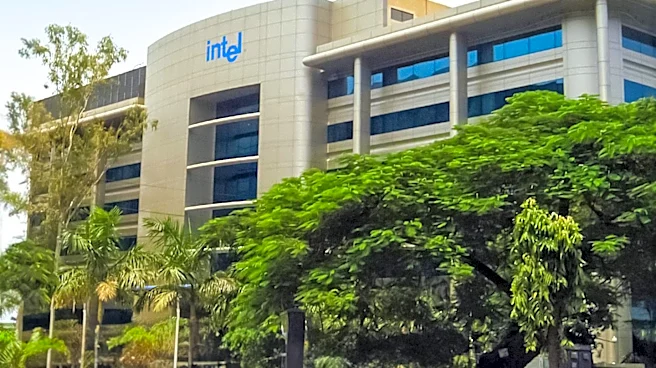
Intel CEO Lip-Bu Tan has invested an additional $9.7 million in Intel stock through his family trust, purchasing 150,000 shares on November 2, 2026. This transaction, filed with the U.S. Securities and Exchange Commission on November 4, occurred at a weighted
average price of $64.73 per share. This latest acquisition follows a significant downturn in Intel's stock price, which saw a 28.6% drop on October 30, marking its steepest one-day decline since 1974, after the company issued a weak fourth-quarter forecast. The shares have continued to fall, trading at $58.27, more than 54% below their late September peak of nearly $127. This is Tan's second substantial purchase since August, bringing his total investment in Intel stock to nearly $20 million. Despite these investments, both his earlier purchase in August at $95 per share and the recent acquisition are currently showing paper losses, with the combined position down approximately $4.8 million.
Why It's Important?
This significant stock purchase by Intel's CEO, Lip-Bu Tan, signals a potential vote of confidence from within the company despite recent financial setbacks and a bleak market outlook. Insider buying can sometimes be interpreted by investors as a positive indicator, suggesting that leadership believes the stock is undervalued and expects future recovery or growth. However, the fact that both of Tan's recent investments are currently underwater highlights the severe challenges Intel is facing, including a projected weak fourth quarter, a slowdown in the PC market expected to last through the first half of 2027, and manufacturing constraints affecting server chip supply. The company's forecast of $15 billion to $16 billion in fourth-quarter revenue falls short of analysts' expectations, and its adjusted earnings projection of 25 cents per share is significantly lower than the anticipated 43 cents. This situation could further impact investor sentiment and the company's market valuation, especially as competitors like AMD gain market share in the server CPU segment.
What's Next?
Intel faces immediate challenges in addressing its supply constraints and navigating a softening PC market, which it anticipates will persist into the first half of 2027. The company's ability to unlock additional supply for its Xeon family of processors will be critical in meeting demand and competing with rivals like AMD, which has seen significant growth in its data center revenue. Investors will closely monitor Intel's performance in the upcoming quarters, particularly its January report, for signs of recovery in supply chains and stabilization of its gross margins. The potential for a deal with SK Hynix regarding Intel's Ohio fab for DRAM manufacturing could also be a significant development, though no specific agreements have been confirmed. The market will be watching for any strategic moves by Intel to regain its competitive edge and improve its financial outlook amidst these headwinds.
Beyond the Headlines
The CEO's substantial personal investment amidst declining stock prices raises questions about corporate leadership's strategy and long-term vision during periods of significant market volatility and operational challenges. While such moves can be seen as a display of commitment, they also underscore the pressure on executives to restore investor confidence and steer the company through difficult times. The broader implications extend to the semiconductor industry, where supply chain disruptions, evolving market demands, and intense competition are reshaping the landscape. Intel's struggles highlight the rapid shifts in technology and the need for continuous innovation and adaptability. The company's ability to overcome its current setbacks will not only impact its own future but also influence the dynamics of the global technology sector, particularly in areas like AI infrastructure and data centers, where demand for advanced chips remains high.