




What's Happening?
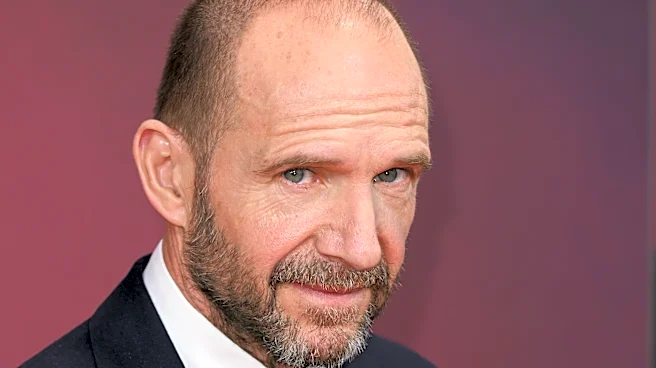
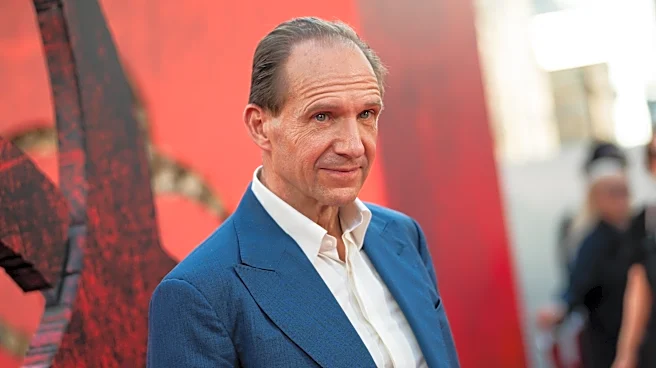
Ralph Fiennes, the English actor known for roles such as Lord Voldemort in 'Harry Potter' and M in the James Bond series, has maintained a successful career despite decades of tabloid attention on his personal life. Fiennes, who grew up in an artistic
family with frequent moves and financial instability, developed an early love for theater, particularly Shakespeare. He trained at the Chelsea College of Art and Design before transferring to the Royal Academy of Dramatic Art. His career quickly ascended, joining the Royal National Theatre and later the Royal Shakespeare Company. His film debut was in 1991, and he gained international recognition and an Oscar nomination for his role as Amon Goth in Steven Spielberg's 'Schindler's List'. Fiennes has consistently been drawn to complex, ambiguous characters, stating his interest in individuals capable of both good and cruelty. His recent role as Coriolanus Snow in the new 'Hunger Games' installment highlights his continued prominence.
Why It's Important?
Fiennes' career trajectory demonstrates the resilience of artistic talent in the face of intense public and media scrutiny. His ability to transition from acclaimed Shakespearean actor to a Hollywood figure, and then to iconic roles in major franchises like 'Harry Potter' and James Bond, showcases a rare versatility and enduring appeal. This longevity is significant in an industry often quick to discard those embroiled in scandal. His consistent choice of complex characters, rather than purely heroic ones, has allowed him to cultivate a unique artistic identity that resonates with both critics and mass audiences. The public's continued embrace of Fiennes, despite past controversies, suggests a separation between an artist's personal life and their professional contributions, particularly when the work itself is of high caliber. This phenomenon can influence how other public figures navigate personal challenges while maintaining professional standing.
What's Next?
Fiennes continues to take on diverse roles, as evidenced by his recent appearance in 'The Hunger Games' prequel. His ongoing involvement in high-profile projects like 'The Grand Budapest Hotel', 'The Menu', and the Oscar-nominated 'Conclave' indicates a sustained demand for his acting prowess. It is likely he will continue to balance ambitious, critically acclaimed productions with more mainstream, audience-reaching films. The industry's current landscape, particularly with movements like #MeToo, might lead to different public and media reactions to similar personal controversies today. However, Fiennes' established reputation and body of work suggest his career will likely remain robust, with future projects continuing to explore the nuanced and often contradictory aspects of human nature that he finds compelling.
Beyond the Headlines
The narrative surrounding Ralph Fiennes highlights a broader cultural shift in how public figures are perceived and judged. While tabloids historically focused on personal scandals, Fiennes' career success suggests that a strong artistic output can often overshadow personal controversies in the long run. The article notes that in his prime, a 'masculinized press' often judged the women involved in his affairs more harshly than Fiennes himself, a dynamic that would likely be challenged in today's media environment. This raises questions about accountability, gender dynamics in media reporting, and the evolving standards for public figures. Fiennes' enduring popularity also speaks to the parasocial relationships audiences form with actors, where a perceived connection allows fans to overlook personal failings in favor of their artistic contributions. His career serves as a case study in navigating fame, scandal, and artistic integrity over several decades.