

What's Happening?
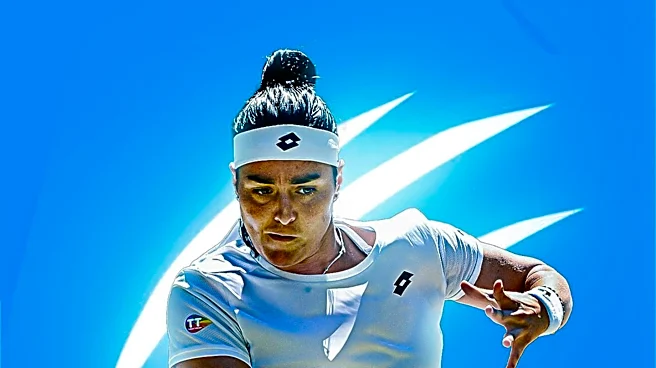
Ons Jabeur is set to return to professional tennis in 2027 after an extended absence due to injuries, exhaustion, and pregnancy. Her return comes at a time when the WTA Tour is increasingly dominated by aggressive, first-strike players known for their
powerful serves and hard-hitting style, such as Elena Rybakina, Aryna Sabalenka, and Linda Noskova. Jabeur, known for her unique and varied playing style, which includes slices, drop shots, and strategic court manipulation, will face the challenge of competing against these power-focused opponents. At her peak, Jabeur reached world No. 2, secured five WTA titles, and made three Grand Slam finals appearances. Her ability to disrupt opponents' rhythm and positioning with a combination of finesse and aggression was key to her past successes, as demonstrated by her victories over Rybakina and Sabalenka at Wimbledon in 2023.
Why It's Important?
Jabeur's return is significant for the WTA Tour as it tests whether a highly strategic and varied playing style can still thrive against the prevailing power-hitting trend. The modern women's game heavily rewards players who can establish immediate control through powerful serves and aggressive groundstrokes, making it challenging for players who rely on different tactics. The high percentage of service games won by players like Rybakina and Sabalenka indicates fewer opportunities for opponents to apply sustained pressure. If Jabeur can successfully adapt and compete, it could demonstrate the enduring value of tactical diversity in tennis, potentially influencing future player development and coaching strategies. Conversely, if she struggles, it might further solidify the dominance of power-based tennis, suggesting a shift in the sport's strategic landscape. Her performance will be closely watched by fans and analysts alike, as it could signal a broader trend in women's professional tennis.
What's Next?
Jabeur's immediate focus will be on rediscovering her physical and tactical sharpness after a lengthy break. Her ability to move effectively and reach neutral positions quickly will be crucial for her varied shots to remain tactical weapons rather than acts of desperation. She will need to execute her game with exceptional precision, as even slight errors against power hitters can lead to immediate disadvantages. The challenge also includes facing players like Mirra Andreeva and Karolina Muchova, who combine tactical intelligence and variety with considerable baseline power, presenting a different kind of test. Her performance in early tournaments will indicate how well her unique style can contend with the current WTA landscape. The tennis community will be observing whether she can create the conditions necessary for her game to succeed, potentially inspiring other players to explore diverse strategies.
Beyond the Headlines
The narrative surrounding Jabeur's return extends beyond individual performance, touching upon the evolution of professional tennis and the debate between power versus finesse. Her success or struggle could spark discussions about the ideal player archetype in modern tennis and whether the sport is becoming too homogenized. Ethically, it raises questions about player longevity and the physical demands placed on athletes in a power-driven era. Culturally, Jabeur's unique style has garnered a dedicated fanbase, and her return could reignite interest in more artistic and strategic forms of play. Her journey will also highlight the mental and physical resilience required for athletes to return to elite competition after significant breaks, including pregnancy, offering a compelling human interest story within the competitive world of professional sports.