







What's Happening?
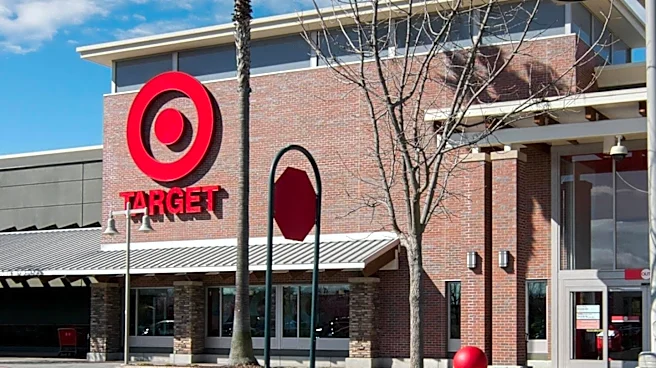
Target Corporation announced robust third-quarter 2026 financial results, surpassing analyst expectations. The company reported a 7.1% increase in net sales compared to the previous year, driven by a 5.0% rise in comparable traffic. Comparable sales grew
by 5.6%, a significant improvement from a 2.7% decline in the same period last year. GAAP and Adjusted earnings per share (EPS) reached $2.65, considerably higher than $1.51 and $1.78, respectively, in the prior year. These results include a $301 million pretax benefit from tariff refunds, which contributed $0.50 to both GAAP and Adjusted EPS. Sales growth was broad-based across core merchandising categories, with notable increases in Fun 101 (nearly 27%), Beauty (over 9%), and Food and Beverage (nearly 7%). Digital comparable sales saw a 9.8% increase, while store comparable sales grew by 4.6%. Michael Fiddelke, CEO of Target, attributed the positive performance to continued progress on strategic priorities focused on value, style, and design for families.
Why It's Important?
Target's strong third-quarter performance signals a significant turnaround for the retail giant, demonstrating its ability to attract and retain customers amidst a challenging economic environment characterized by persistent inflation. The substantial increase in comparable traffic and sales across various categories indicates that Target's strategic investments in pricing, assortment, and the overall shopping experience are resonating with consumers. The inclusion of $0.50 per share from tariff refunds highlights an external factor that positively impacted profitability, but even without it, the underlying growth remains strong. This positive momentum, particularly heading into the crucial holiday shopping season, positions Target favorably against competitors. The company's ability to drive both in-store and digital sales growth suggests a successful omnichannel strategy, crucial for modern retail success. This performance could influence investor confidence in the retail sector and potentially set a positive tone for other retailers reporting earnings.
What's Next?
Following its strong third-quarter results, Target has updated its full-year 2026 guidance, now expecting net sales growth around 6%, a one-percentage-point increase from previous projections. The company also anticipates a full-year operating income margin rate of approximately 6.2%, including about 1.1 percentage points of benefit from tariff refunds recognized to date. Full-year GAAP and Adjusted EPS guidance has been raised to a range of $10.65 to $11.40, incorporating approximately $2.14 in tariff refund benefits. Looking ahead to 2027, Target plans to significantly increase its capital expenditures to between $5 billion and $6 billion, up from an expected $5 billion in 2026. These investments will likely focus on store remodels, technology enhancements, and supply chain improvements to sustain growth. The company is also preparing for the holiday season with new AI-powered shopping experiences and a focus on value offerings, including thousands of gifts priced at $5 and under.
Beyond the Headlines
Target's impressive rebound extends beyond mere financial figures, reflecting a broader shift in consumer behavior and retail strategy. The company's emphasis on 'style, design, and value' appears to be effectively differentiating it in a crowded market, attracting a diverse customer base. The significant growth in categories like 'Fun 101' (hardlines) and Beauty, alongside consistent performance in Food and Beverage, suggests that Target is successfully positioning itself as a one-stop shop for both essential and discretionary items. The strategic use of tariff refunds to bolster earnings, while a one-time benefit, also provides additional capital for future investments. This performance could signal a renewed focus on physical store experiences, as evidenced by increased capital expenditures for remodels, even as digital sales continue to climb. The integration of AI-powered shopping experiences for the holiday season also points to a forward-looking approach in leveraging technology to enhance customer engagement and drive sales.