






What's Happening?
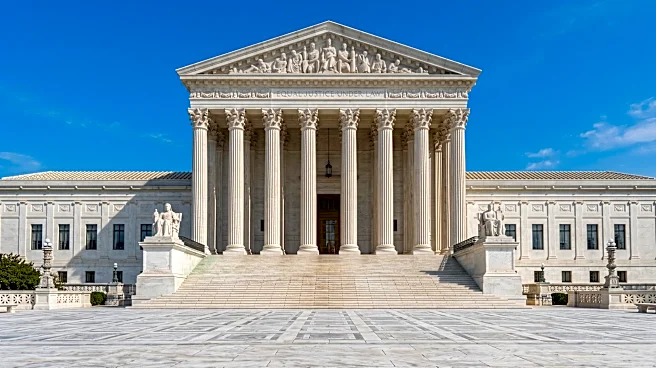
The Supreme Court's 'major questions doctrine' is significantly impacting the debate over whether Section 7 of the Clayton Act permits an efficiency defense in merger cases. This doctrine, most clearly articulated in the 2022 ruling in West Virginia v.
EPA, mandates that for 'major' issues, government agencies require 'clear congressional authorization' for the power they claim, rather than relying on vague textual bases. This textualist approach undermines arguments for an efficiency defense in antitrust law because the Clayton Act does not explicitly mention such a defense. Historically, antitrust agencies and courts had more leeway to interpret the law, but the recent textualist turn by the Supreme Court restricts this discretion. The vulnerability of an efficiency defense lies in the absence of its explicit inclusion in the Clayton Act, despite Congress having included an efficiency defense in the 1936 Robinson-Patman Act amendment to the Clayton Act, specifically in Section 2.
Why It's Important?
This development is crucial for U.S. industries and economic stakeholders as it redefines the legal landscape for corporate mergers and acquisitions. Companies seeking to merge will find it more challenging to defend their actions based on claims of increased efficiency, as the 'major questions doctrine' prioritizes explicit congressional authorization over agency interpretation. This could lead to increased scrutiny of mergers by antitrust enforcers, potentially resulting in fewer large-scale consolidations. The shift means that the burden of proof for demonstrating a merger's benefits will likely fall more heavily on preventing a lessening of competition, rather than on projected efficiencies. This could particularly affect industries where consolidation is common, as the absence of an explicit efficiency defense could make it harder to justify mergers that might otherwise be seen as beneficial for innovation or cost reduction. The ruling emphasizes that major policy decisions are intended for Congress, not for agencies to infer from ambiguous texts.
What's Next?
Antitrust enforcers and courts will likely adopt a more stringent approach to evaluating merger proposals, focusing strictly on the explicit language of the Clayton Act. This could lead to a re-evaluation of existing merger guidelines and a potential increase in challenges to proposed mergers that cannot demonstrate a clear lack of harm to competition without relying on efficiency arguments. Businesses planning mergers will need to adjust their strategies, emphasizing how their proposed consolidations do not 'substantially lessen competition' rather than highlighting potential efficiencies. The long-term impact could include a more fragmented market in some sectors, as the legal pathway for large mergers becomes more constrained. The Supreme Court's stance suggests a continued emphasis on textualism, which will likely influence future interpretations of regulatory statutes across various sectors.
Beyond the Headlines
The 'major questions doctrine' reflects a broader philosophical shift in judicial interpretation, moving towards a more literal reading of statutes and away from implied powers or policy considerations by administrative agencies. This has significant implications beyond antitrust law, potentially affecting environmental regulations, financial oversight, and other areas where agencies have historically exercised considerable interpretive discretion. The doctrine underscores a tension between legislative intent and administrative flexibility, with the Supreme Court signaling a preference for clear, explicit congressional directives on matters of significant economic or political impact. This could lead to a more constrained administrative state, requiring Congress to be more precise in its legislative language if it wishes agencies to have broad authority. The debate also highlights the ongoing tension between economic theories of competition, which often consider efficiencies, and a purely textualist legal framework.