




What's Happening?
Gold prices experienced a decline on Tuesday, November 24, following a sharp rebound the previous day. Spot gold fell nearly 2% to US$3,569 per ounce, while U.S. gold futures dropped over 2.3% to approximately US$3,557 per ounce. This downturn comes as
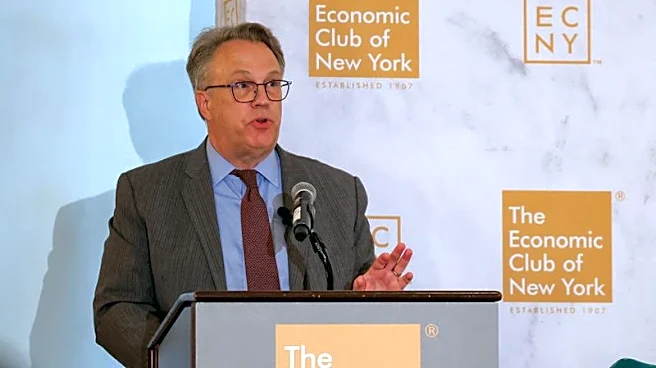
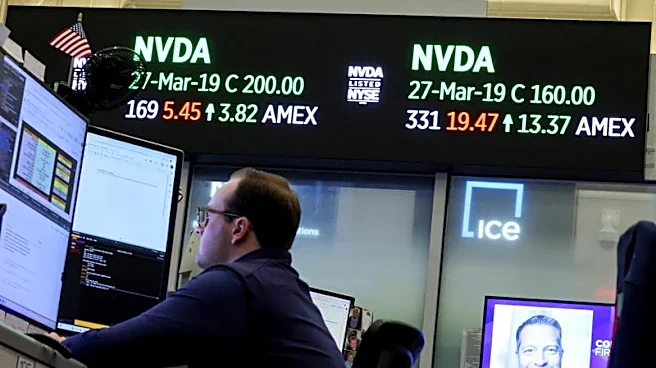
investor attention shifts to the upcoming October U.S. Personal Consumption Expenditures (PCE) price index, the Federal Reserve's preferred inflation gauge, scheduled for release on Wednesday, November 25. This PCE data is the last major inflation report before the Fed's final monetary policy meeting of 2026. New York Fed President John Williams indicated on Monday that persistently high inflation warrants tighter monetary policy, with future interest rate decisions dependent on incoming economic data. The previous day's gold rally was partly fueled by the announcement of Nvidia CEO Jensen Huang's return, which boosted broader financial markets.
Why It's Important?
The movement in gold prices, particularly its sensitivity to U.S. inflation data and Federal Reserve policy, is highly significant for U.S. investors and the broader economy. Gold is often seen as a hedge against inflation and economic uncertainty, but its value can be inversely affected by rising interest rates, which increase the opportunity cost of holding non-yielding assets. A 'hot' inflation print from the PCE index could reinforce the Fed's hawkish stance, potentially leading to further interest rate hikes and putting downward pressure on gold prices, as noted by independent financial markets analyst Nikos Tzabouras. This scenario could impact investment strategies across various asset classes, as investors reallocate capital based on expectations of monetary tightening. The interplay between technology stock performance and gold prices also highlights how broader market sentiment, influenced by sectors like AI, can affect traditional safe-haven assets.
What's Next?
The immediate focus for investors will be the release of the October U.S. Personal Consumption Expenditures (PCE) price index on Wednesday, November 25. This data will heavily influence expectations for the Federal Reserve's monetary policy decisions at its upcoming meeting. Traders are currently pricing in a 25-basis-point rate hike in December, with a possibility of a larger 50-basis-point increase. If the PCE data indicates persistent high inflation, it could solidify expectations for further tightening, potentially leading to continued pressure on gold prices. Conversely, a softer inflation report might provide some relief for gold. The Fed's statements following its final monetary policy meeting of 2026 will provide crucial guidance on the future trajectory of interest rates and their impact on the U.S. economy and financial markets.
Beyond the Headlines
The current market dynamics, where gold prices are reacting sharply to inflation data and central bank commentary, underscore the delicate balance the Federal Reserve is attempting to strike between controlling inflation and avoiding a significant economic downturn. The 'transitory' vs. 'persistent' inflation debate continues to shape market sentiment and investor behavior. For the U.S. economy, prolonged periods of high inflation coupled with aggressive monetary tightening could lead to increased borrowing costs for businesses and consumers, potentially slowing economic growth. The volatility in gold, often considered a stable asset, reflects a broader uncertainty in the financial landscape, where traditional economic indicators are being re-evaluated in the context of post-pandemic recovery and evolving geopolitical factors. This environment necessitates careful monitoring by policymakers and investors alike to navigate potential economic shifts.