




What's Happening?
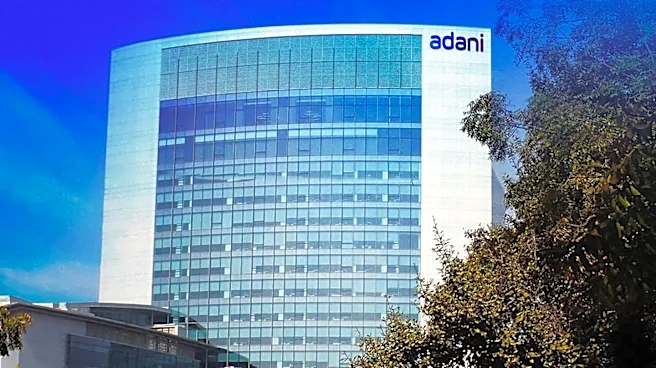
AECOM has been appointed by the Adani Group to provide program management services for three significant multi-year energy and aviation infrastructure programs in India. These initiatives represent a combined capital investment of approximately $15 billion.
The projects include the development of the 30-gigawatt Khavda Renewable Energy Plant in Gujarat, which will integrate solar, wind, and battery energy storage systems. Additionally, AECOM will manage four transmission and substation projects across Gujarat and Maharashtra to facilitate renewable energy integration and enhance grid resilience. The company will also support the modernization and expansion of airports in Ahmedabad, Mangaluru, and Thiruvananthapuram, aiming to increase passenger capacity and regional connectivity. This appointment is part of AECOM's strategy to expand its presence in high-growth energy and aviation markets and capitalize on increasing private-sector infrastructure investments in India. Following this announcement, AECOM's stock gained 2.7% during trading hours.
Why It's Important?
This agreement is significant for AECOM as it strengthens its international infrastructure footprint and positions the company to benefit from India's substantial infrastructure investments and clean energy transition. While the specific contract value for AECOM remains undisclosed, the scale and multi-year nature of these programs are expected to enhance the company's revenue visibility and create opportunities for future contracts. This move aligns with AECOM's strategy of expanding into key global markets, leveraging its established presence in India's renewable energy, water, advanced manufacturing, data center, and transportation sectors. The success of these projects could further solidify AECOM's competitive standing in India's rapidly growing infrastructure market, potentially leading to long-term client relationships and additional business opportunities. The investment also highlights the broader trend of increasing demand for electrical and mechanical construction services globally, as evidenced by the growth experienced by AECOM's peers like EMCOR Group, Inc. and Sterling Infrastructure, Inc. in their respective markets.
What's Next?
AECOM will proceed with providing program management services for the Khavda Renewable Energy Plant, the transmission and substation projects, and the airport modernization and expansion initiatives. The multi-year nature of these programs suggests a sustained period of engagement for AECOM. The company's management anticipates organic net service revenue growth of 4-6% for fiscal 2027, excluding a fiscal 2026 construction management project charge, indicating a positive outlook for its financial performance. The successful execution of these projects could lead to further expansion of AECOM's portfolio in India and potentially other emerging markets. The broader infrastructure sector is expected to continue seeing robust demand, with companies like EMCOR Group, Inc. and Sterling Infrastructure, Inc. also reporting significant backlogs and growth prospects in areas such as data centers, semiconductors, advanced manufacturing, and energy infrastructure.
Beyond the Headlines
This collaboration between AECOM and the Adani Group underscores the increasing global focus on sustainable infrastructure development and renewable energy. The Khavda Renewable Energy Plant, with its 30-gigawatt capacity, represents a substantial commitment to clean energy, reflecting a broader shift towards decarbonization in major economies. The integration of solar, wind, and battery energy storage systems highlights the evolving complexity and technological sophistication required for modern energy infrastructure. Furthermore, the airport modernization projects signify the growing demand for enhanced connectivity and capacity in rapidly developing regions, which is crucial for economic growth and international trade. The involvement of a U.S.-based company like AECOM in such large-scale Indian projects also illustrates the interconnectedness of global infrastructure development and the potential for international partnerships to drive progress in critical sectors. This trend could lead to increased cross-border investment and knowledge transfer in infrastructure and energy technologies.