



What's Happening?
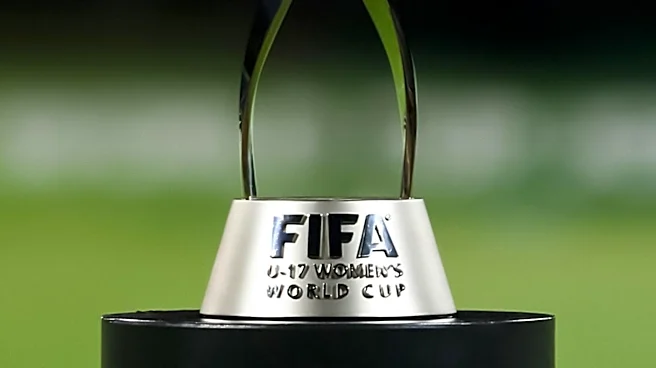
FIFA has officially approved the inaugural Women's Club World Cup, scheduled to take place from January 5-30, 2028. This new tournament, involving 19 teams, was sanctioned at FIFA's Congress last December. The timing of the competition is expected to significantly
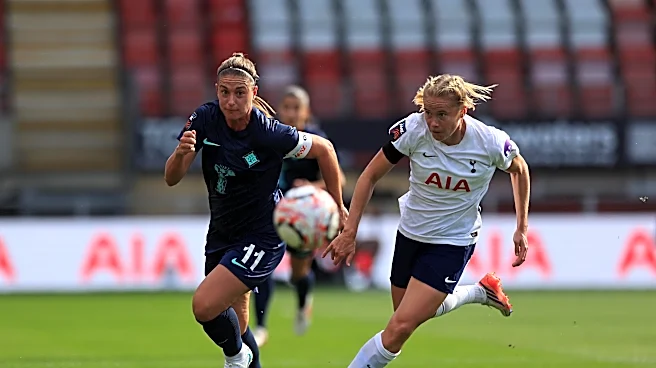
disrupt the Women's Super League (WSL) schedule, with two of England's top clubs, Arsenal, Chelsea, and Manchester City, potentially missing up to a month of domestic play. While qualification criteria are yet to be confirmed, Arsenal's 2025 Champions League triumph likely secures their participation. Chelsea is another potential contender based on co-efficients, though if Manchester City wins this season's Champions League, they would likely take Chelsea's spot. The fixture schedule for the 2027-2028 WSL season has not been finalized, but participating clubs could miss at least four WSL matchdays and FA Cup fourth-round fixtures.
Why It's Important?
The introduction of the Women's Club World Cup marks a significant expansion of international women's football, aiming to elevate the sport's global profile and provide a new elite competition. However, its scheduling poses substantial challenges for established domestic leagues like the WSL. The potential absence of top teams for an extended period could compromise the sporting integrity of the WSL, affecting title races, relegation battles, and potentially impacting broadcast deals. This situation highlights a broader tension between the global ambitions of FIFA and the operational realities of national leagues. It also raises questions about player welfare, as the tournament adds to an already congested international calendar, especially considering it will be held in the same year as the Olympic Games and six months after the Women's World Cup. The disruption could lead to calls for better coordination between international and domestic football bodies to ensure sustainable growth for the women's game.
What's Next?
WSL Football, the independent body overseeing England's top two tiers of women's football, has expressed significant concerns about the timing of the tournament, calling it potentially 'catastrophic' for its competition. They claim they were not consulted over the final dates by FIFA. The challenge now lies in finding a way to reschedule the potentially 10 missed fixtures for participating WSL clubs while maintaining competitive balance. Moving the existing winter break to accommodate the Club World Cup is a possibility, but it could lead to a lopsided calendar and backlogs. NWSL Commissioner Jessica Berman noted that while the tournament doesn't disrupt their season, it falls during their off-season, creating an 'uneven playing field' for competing teams. Discussions and negotiations between FIFA, continental confederations, and national leagues will be crucial to mitigate the impact and establish a more harmonized global football calendar.
Beyond the Headlines
The scheduling conflict surrounding the Women's Club World Cup reveals a fundamental challenge in the rapid growth of women's football: the need for integrated planning across different levels of the sport. While the tournament offers a prestigious platform, its implementation without full consultation with domestic leagues can create unintended consequences, potentially undermining the very leagues that develop the talent for such international competitions. This situation highlights the power dynamics within global football governance and the importance of stakeholder engagement. It also brings to the forefront the issue of player workload and the need for a holistic approach to the women's football calendar that prioritizes player health and performance. The success of the Women's Club World Cup will depend not only on its competitive quality but also on how effectively FIFA addresses these logistical and structural challenges in collaboration with national and continental bodies.